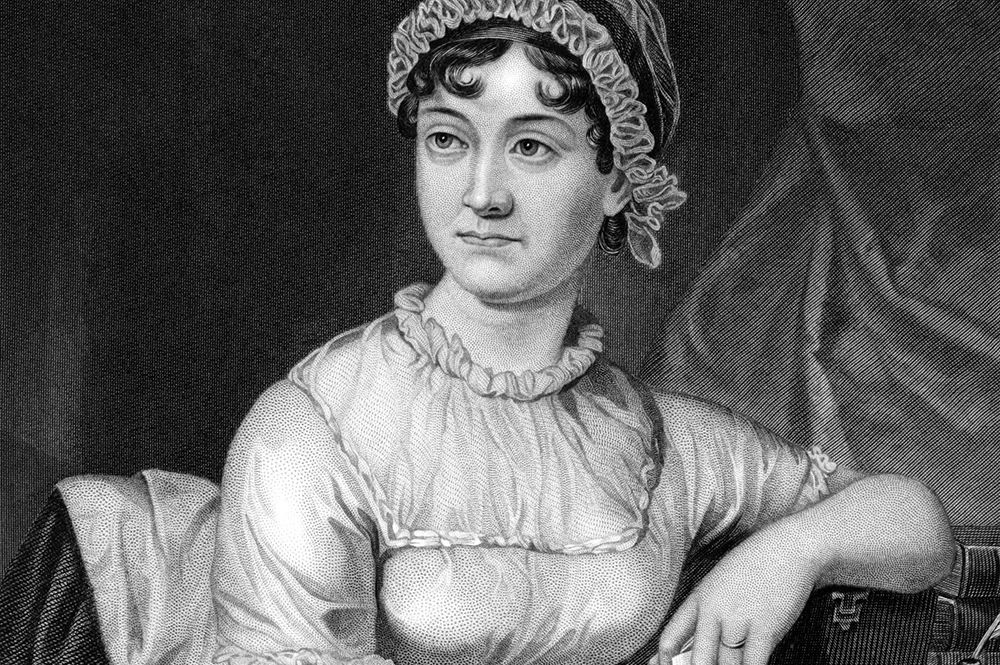

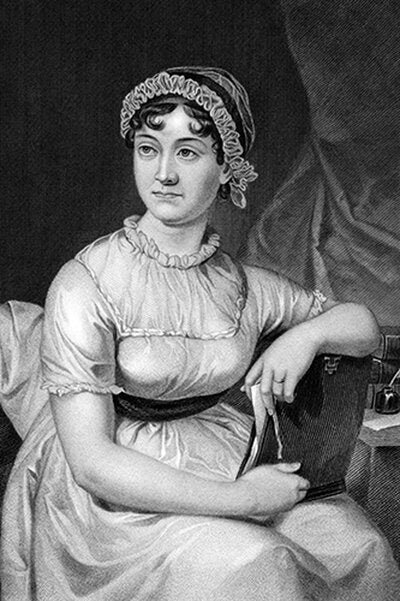
Last December marked the 250th anniversary of Jane Austen’s birth (she was born Dec. 16, 1775) and fans of her novels have been celebrating with tea parties, brunches, and balls. Her novels — including “Sense and Sensibility,” “Pride and Prejudice” and “Emma” — enjoy immense popularity. They are the subject of numerous academic studies and TV and film adaptations. Justine S. Murison is the head of the English department, and she teaches Austen’s novels in her courses. Murison spoke with News Bureau arts and humanities editor Jodi Heckel.
Why do you think Jane Austen’s novels have enjoyed such enduring popularity?
There is so much to love about Jane Austen’s novels! Two major aspects come to mind immediately, though. First, her books give readers tight marriage plots that center, for the most part, on the fortunes of women who are smart, imaginative, witty, and thoughtful. Not every heroine embodies all of those characteristics, but each one is presented in such realistic detail that readers find themselves identifying with the heroines — perhaps except Emma, who Austen famously said was a heroine “whom no one but myself will much like.” But the novel “Emma” is a great example of the second reason her novels continue to be so enduringly popular: They’re wickedly funny. Austen’s ability to build rich, realistic, comic characters out of observing the foibles of everyday people is, in my opinion, absolutely unmatched in English and American literature.
What about Austen’s social commentary on class and gender roles resonates in today’s culture and makes her novels so appealing for TV and film adaptations?
I do think that Austen’s novels, and the Regency period more broadly, have been so popular today because they allow writers, readers, and viewers (of Austen-inspired movies and TV shows like “Bridgerton”) a historical period of rigid class hierarchy and unequal distribution of wealth and prestige to think through our own similar class and wealth hierarchies today. (It’s also why the Gilded Age has had a resurgence in popular culture as well.) Austen’s novels, again perhaps with the exception of “Emma,” are about women like Austen herself, from the margins of the gentry trying to hang on to respectability, or in the case of my favorite novel, “Persuasion,” a family in the lower nobility tumbling down the financial ladder as new upstarts with money gained through the Napoleonic Wars are rising. When we read the novels, we are seeing a society not so dissimilar from our own, and we peek into that society from the point of view of heroines who are often outside that center of power. As Austen’s novels always remind us, being outside of power is the best position from which to see your society clearly, and these novels and their adaptations allow us to do that both with her era and our own.
Along with this topicality, her novel’s offer wish fulfillment as well. The novels might critique rigid class and gender hierarchies, but the women who merit it — our heroines — gain the good marriages they deserve. For readers, it’s like having your cake (of critique) and eating it too (enjoying a happy ending!).
How did Austen’s novels influence English literature?
One of the things I teach and write about is the history of the novel form, and Austen has a central place in that history. After her death in 1817, her family (and especially her nephew, James Edward Austen-Leigh) worked to keep her biography alive and her books in print. She created enduring cultural touchstones in characters like Mr. Darcy and Elizabeth Bennett, and her sparkling dialogue and narrative virtuosity gained many readers, especially later in the century as realism came to dominate novel writing.
Her place as a “master” of the art of the novel certainly owes a lot to plot, dialogue, and character, but even more so to her narrative technique. One of the joys of teaching Austen is introducing students to her innovative use of what scholars call “free indirect discourse.” To put it simply, this is when a third-person narrator merges voices with a character’s voice. It’s often a quite subtle, imperceptible shift. When you’re reading, you suddenly realize a few sentences into a paragraph that you’re no longer hearing the narrator’s wry, witty voice but the silly voice of, say, Mr. Collins in “Pride and Prejudice.” He’s not speaking — it’s not direct dialogue — but we’ve jumped not just into his mind but into his way of putting things. That’s how Austen achieves such complexity for her characters, even the comic ones, and also brings humanity to characters that one originally might be tempted to scorn or laugh at.