Nine researchers at the University of Illinois Urbana-Champaign's College of LAS have been named to the 2026 Clarivate Analytics Highly Cited Researchers list. The list recognizes researchers and social scientists who have demonstrated exceptional influence, as reflected through their publication of multiple papers frequently cited by their peers during the last decade.
The highly cited Illinois researchers this year are: crop sciences and plant biology professor Lisa Ainsworth; climate, meteorology and atmospheric sciences professor Atul Jain; plant biology professor Tracy Lawson; plant biology and crop sciences professor Andrew Leakey; plant biology and crop sciences professor emeritus Donald Ort; psychology professor Brent Roberts; and cell and developmental biology professor Boxuan Zhao. Psychology professor emeritus Ed Diener and crop sciences professor Stephen Long, who are deceased, are also on this year’s list.
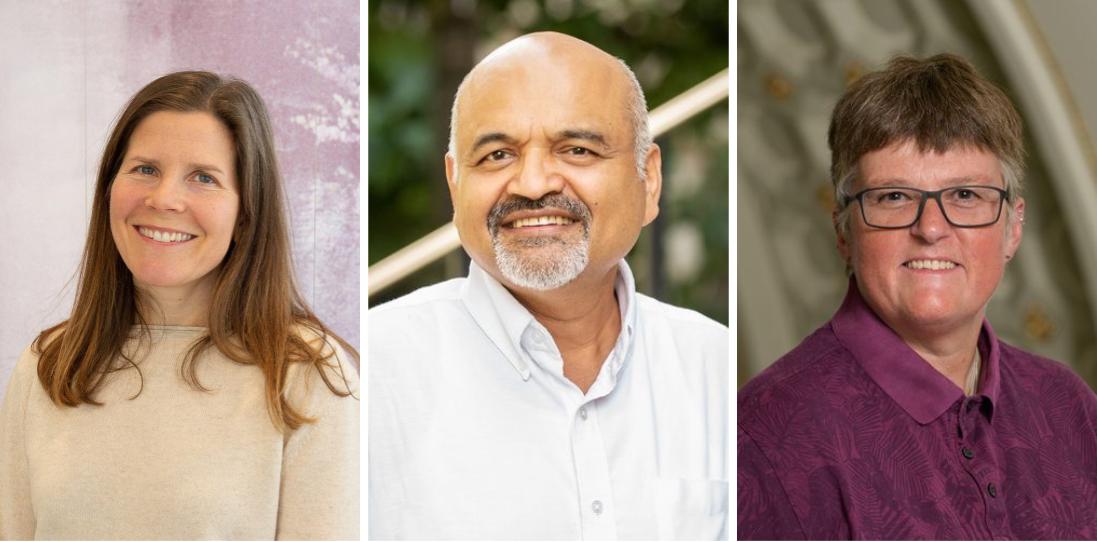
Ainsworth, the interim director of the Carl R. Woese Institute for Genomic Biology, studies crop responses to climate change and tests potential solutions for mitigation of climate change through agriculture. She was the Research Leader for the U.S. Department of Agriculture’s Agricultural Research Service Global Change and Photosynthesis Research Unit before joining the Illinois faculty in 2024. A key goal of her research is to maximize future crop production. She directs the Realizing Increased Photosynthetic Efficiency project and also is affiliated with the Center for Advanced Study and the National Center for Supercomputing Applications.
Jain’s research focuses on developing and applying advanced climate modeling systems to understand and predict how human activities influence the global climate system and how climate change, in turn, affects human activities and natural ecosystems. Internationally recognized for his scientific contributions, he has made significant contributions to major international climate assessments, including those of the United Nations Intergovernmental Panel on Climate Change.
Lawson studies the influence of stomatal behavior on plant productivity and water-use efficiency, manipulating stomatal anatomy and function to produce crops that are more resilient to environmental changes, including higher temperatures and drought. She also focuses on developing new phenotyping tools to optimize plant growth in controlled environments, including vertical farms. She is an affiliate of the IGB.
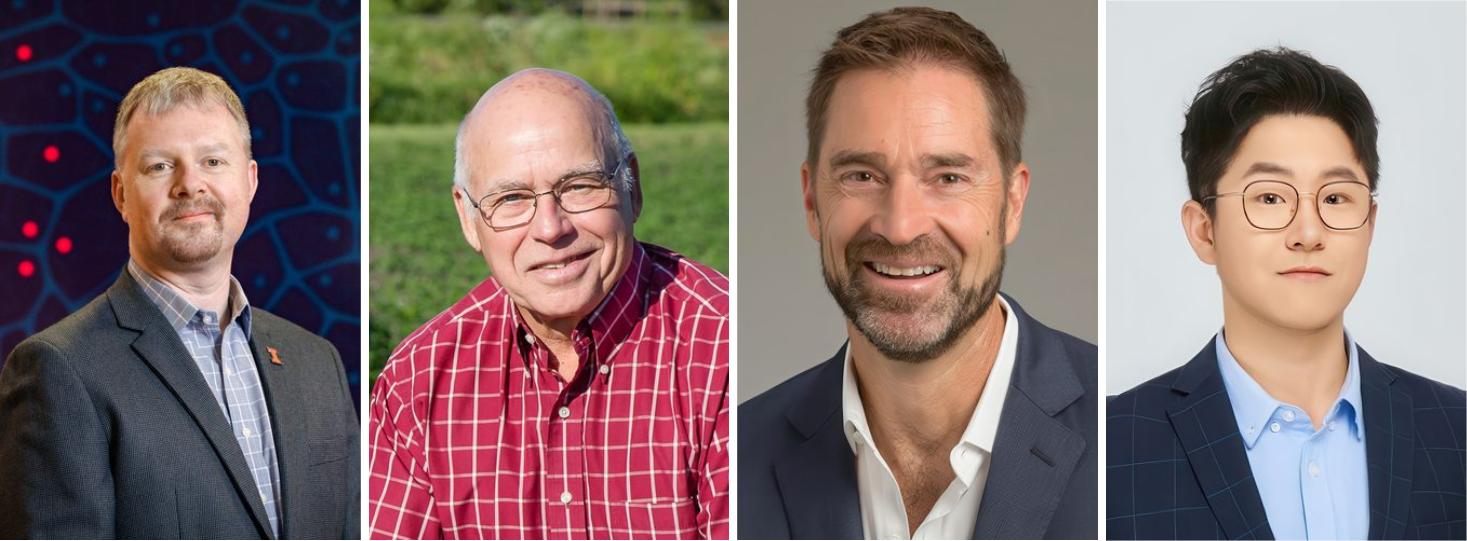
Leakey is an international leader in transdisciplinary team bioscience approaches. His research group develops and applies AI-enabled tools to high-throughput phenotyping, physiological genetics, biodesign and global change biology, with a focus on photosynthesis, stomata and roots. His team has developed technologies to maintain crop production with less water and reduce yield losses to drought stress in multiple species. Leakey also is an affiliate of the IGB, ISEE and the Center for Digital Agriculture.
Ort’s research focuses on improving photosynthesis and addresses crop responses to global change including rising carbon dioxide levels, temperature stress and drought. He directed the open-air agricultural laboratory SoyFACE, served as a research director of the Center for Advanced Bioenergy and Bioproducts Innovation and was deputy director of RIPE. He currently co-leads the Photosynthesis and Food Security theme at the IGB.
Roberts specializes in the field of personality psychology and studies continuity and change in personality throughout adulthood, with an emphasis on understanding the factors that influence change. His recent research focuses on assessing and building social, emotional and behavioral skills. He holds the Gutsgell Endowed Professorship, is a professor of biomedical and translational sciences in the Carle Illinois College of Medicine, and an affiliate of the Center for Advanced Study, the Social and Behavioral Science Institute and the IGB.
Zhao’s laboratory develops and applies new sequencing technologies to map how cells connect and communicate with one another. His team charts how the mammalian brain is wired, how connections are formed and how they change. His team also explores communication between diverse cell types, including the interactions between cancer cells and neurons in brain tumors. His team incorporates transcriptomics and proteomics data into these maps to clarify the underlying molecular mechanisms causing these changes. He is also affiliated with the Neuroscience Program, the IGB, and the Cancer Center at Illinois.
Diener, who died in 2021, was a social psychologist and a leader in the field of positive psychology, which focuses on the factors promoting happiness and well-being. In the mid-1980s, he and colleagues developed the Satisfaction with Life Scale, and in 2009 the Flourishing Scale, both designed to gauge happiness — which he called “subjective well-being” — in a methodical, repeatable manner.
Long, who died in 2025, used computational and bioengineering approaches to improve photosynthetic efficiency in crop plants and worked to address the effects of climate change on crop physiology and yields. He founded RIPE, a multinational project to increase crop production. He was the founding editor of the journal Global Change Biology and was invited to give a TED Talk about his work in 2023. He was a professor in the IGB, and an affiliate of the NCSA and the Center for Advanced Study at the U. of I.