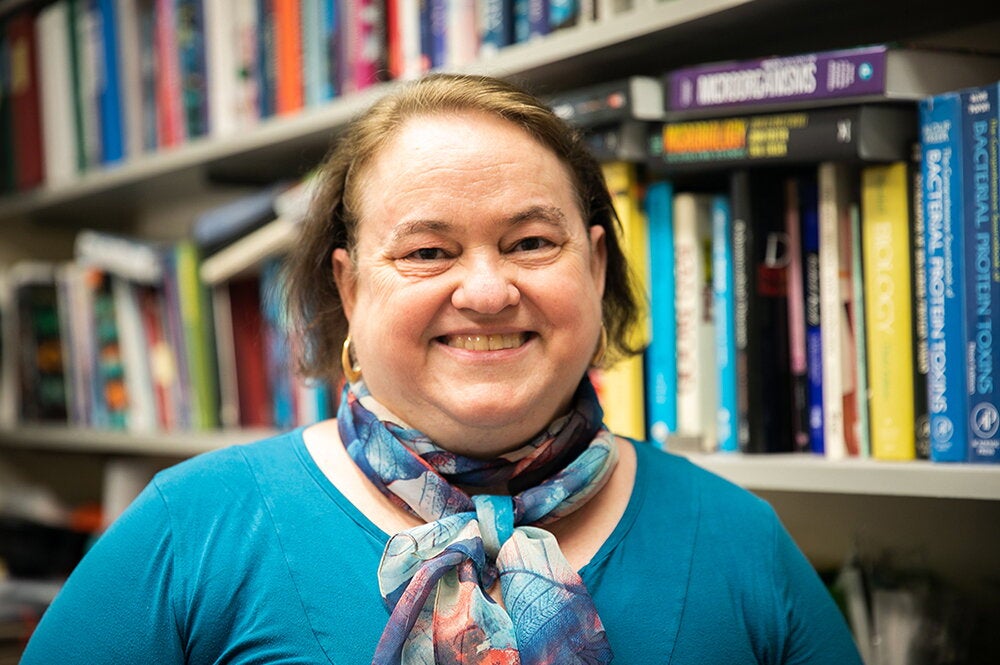
An LAS microbiologist whose discovery of a one-celled organism changed biologists' understanding of life on Earth is this year's recipient of the $500,000 Crafoord Prize in Biosciences. The Royal Swedish Academy of Sciences honored Carl Woese, 75, for his discovery of a third domain of life.
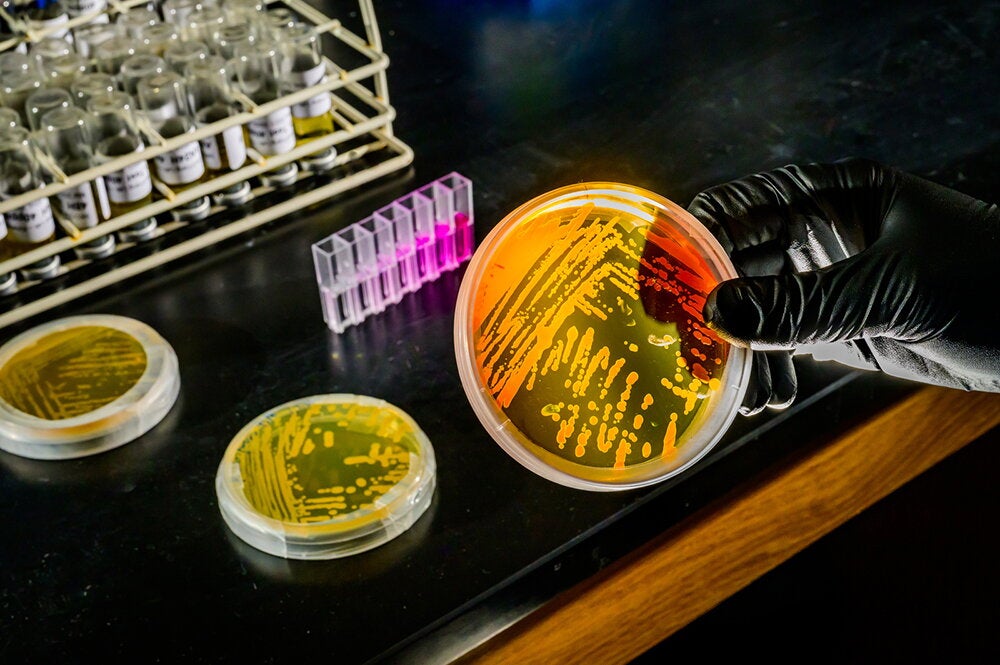
In 1977, in collaboration with LAS microbiologist Ralph S. Wolfe, Woese overturned one of the major dogmas of biology. Until that time, biologists believed that all life on Earth belonged to one of two primary lineages, the eukaryotes (which include animals, plants, fungi and certain unicellular organisms such as paramecia) and the prokaryotes (all remaining microscopic organisms). Woese and Wolfe showed that there are was a third lineage, which they labeled the archaea. Organisms in this domain are simple in their genetic makeup and tend to exist in "extreme" environments, such as niches devoid of oxygen and whose temperatures can be near or above the normal boiling point of water. Such conditions are reminiscent of what is considered to have been the early environment on Earth. These simple microorganisms offer insights into the nature and evolution of cells.
Based on this discovery and subsequent research, Woese later argued that life did not begin with one primordial cell but as at least three simple types of cellular organizations that evolved communally by sharing genes.
Woese received a "genius" research award in 1984 from the John D. and Catherine T. MacArthur Foundation. He was elected into the National Academy of Sciences in 1988, and in 1992 was the 12th recipient of microbiology's highest honor, the Leeuwenhoek Medal. In 1989, Woese was appointed to the Center for Advanced Study, the highest faculty recognition of the Urbana campus.
The Crafoord prize was established in 1980 by Ann-Greta and Holger Crafoord to recognize achievements in areas not covered by the Nobel Prize, which the academy also awards.
The king of Sweden will present the prize, and a gold medal, to Woese September 24 in Stockholm.
Find out more about Carl Woese.