With the benefit of computer imaging and macro-photography, a scholar who has spent two years studying six fragmented clay tablets from the ancient Canaanite civilization is proposing some new interpretations of the tablets.
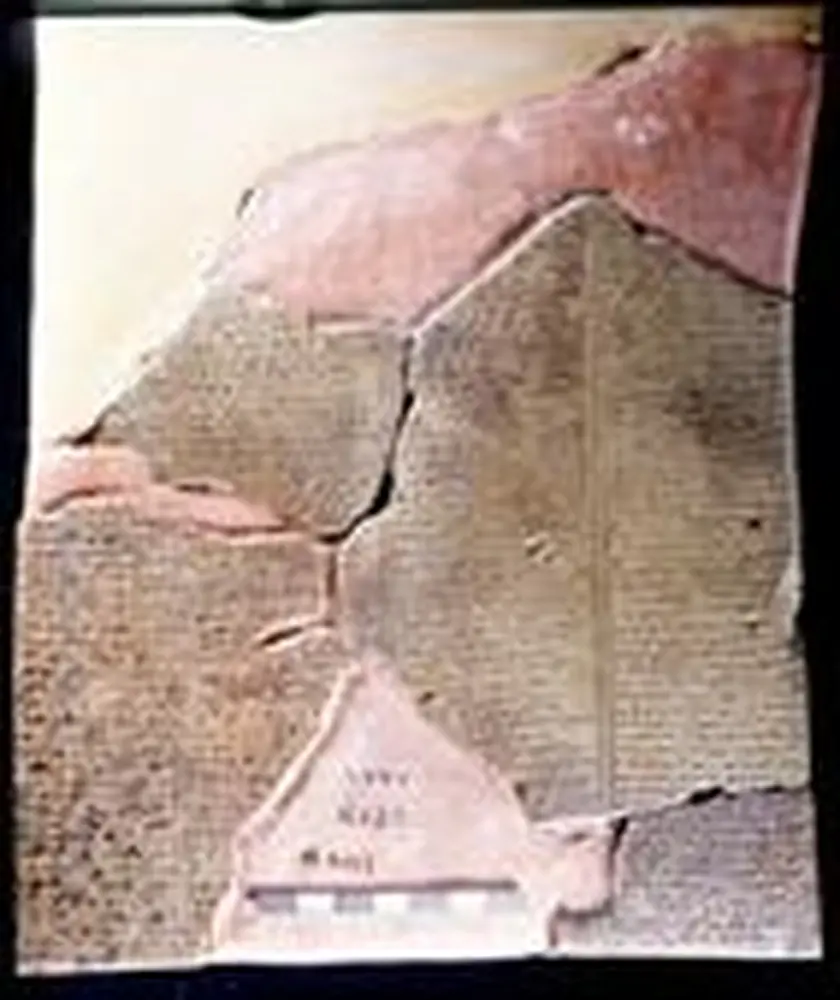
Wayne Pitard, an LAS professor in the Department of Religion and expert on ancient Near Eastern texts, has devoted his scholarly career to the Ugaritic tablets, of which the Baal myth tablets are an important part. Used by the people of Ugarit, a city in northern Syria, and written some 13 centuries before Christ, the Ugaritic clay tablets were inscribed when wet in a wedge-like script called alphabetic cuneiform, then kiln- or sun-baked. They were written in the Ugaritic language, a Canaanite dialect related to Biblical Hebrew, a language long lost and discovered in the house of the high priest of Baal in the 1930s.
The Baal myth or cycle, as it is sometimes called, is one of the few surviving narrative poems from the ancient Canaanite culture and the most important source of information about the Canaanite religion. The six tablets tell how the great Canaan fertility god Baal, well known from the Hebrew Bible, became the leading god in the Canaanite pantheon.
The Baal tablets have received great international scrutiny, but because they were badly damaged when the city of Ugarit in ancient Syria was destroyed around 1180 B.C., the interpretations of the texts have varied greatly. The fragmented letters and words had rendered many parts of the story "ambiguous at best and flat-out incomprehensible at worst," Pitard says.
Instead of being heavily sexual in orientation, as many scholars have argued, the Baal myth tablets are, according to Pitard, fairly tame in content. Among other topics, the tablets speak about family politics and patrimonial hierarchy.
For decades, interpretations of the Baal myth have been consistent with the portrayal of the Canaanite religion in the Bible-"which is to say very polemical," he says. In other words, the Old Testament tends to portray the Canaanite religion "as heavily sexual, and therefore somehow evil, perverse." Which perhaps explains why so many previous scholars have tended to find so much sex in the tablets.
However, as Pitard and his co-investigator Mark S. Smith worked through the texts, they found "very little of that in this story. It's not as titillating as previous scholars have wanted to make it."