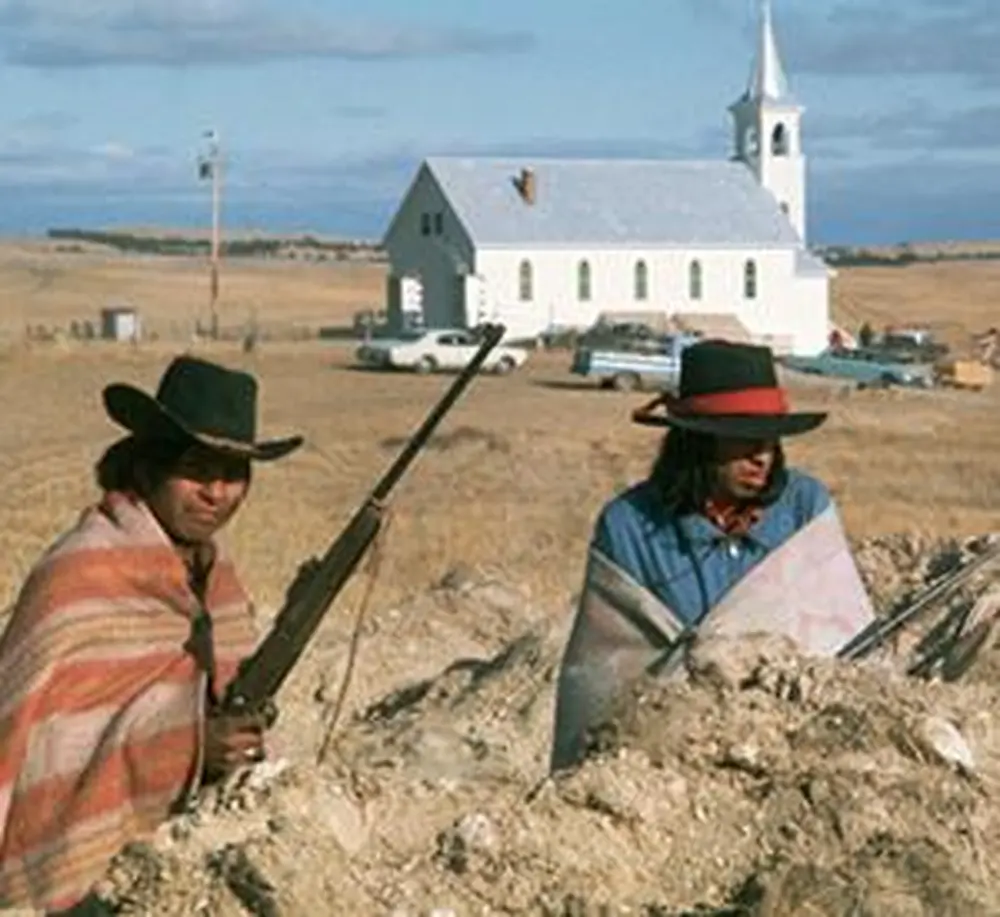
The film footage is riveting. By night, tracer bullets light up the darkness; and by day, bullets are flying, as thousands of rounds are exchanged between federal marshals and a couple of hundred lightly armed American Indian activists. The world watched this drama unfold in 1973 during a tense, 71-day takeover of the village of Wounded Knee by activists.
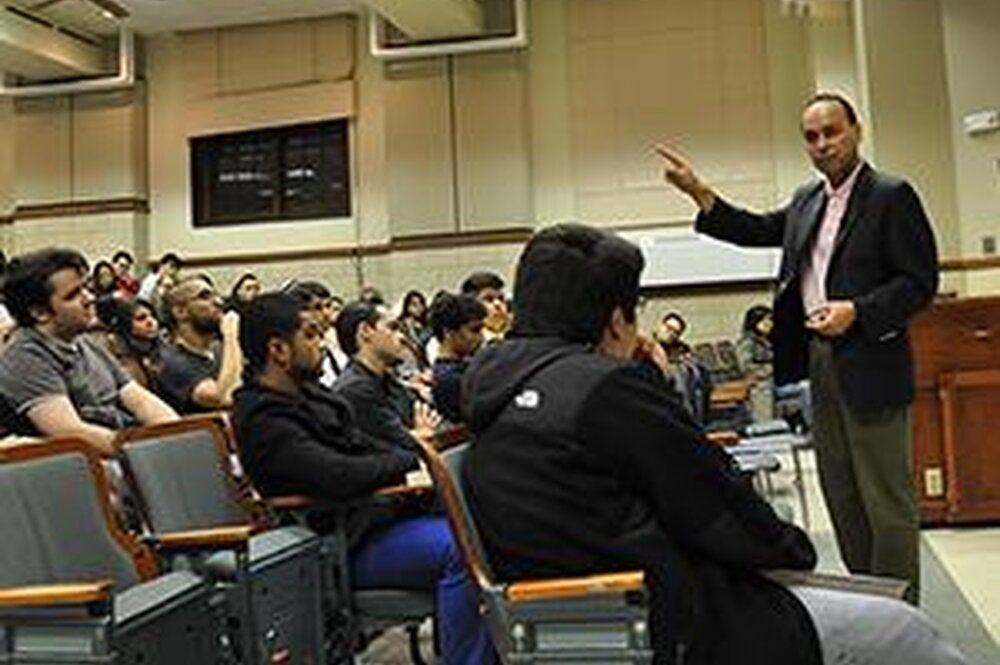
In 2009, the world can continue to watch this slice of history in an acclaimed documentary, Wounded Knee, which screened to four sold-out audiences at the Sundance Film Festival in January. Robert Warrior, director of LAS’s Native American House and American Indian Studies, and an English professor, served as a historical advisor for Wounded Knee—the last episode in the five-part We Shall Remain series on Native American history.
“The movie is a stunning reminder of what a major deal the Wounded Knee takeover was in 1973,” says Warrior, a member of the Osage Nation of Oklahoma. “It was the banner headline on the front page of the New York Times for nearly a solid week. It was a dramatic story that most people today do not remember all that well.”
Wounded Knee is a village with only a scattering of buildings on the Pine Ridge Reservation in South Dakota. According to Warrior, activists took control of the village to spur the U.S. government into taking action against the abuses of their tribal government led by Richard Wilson.
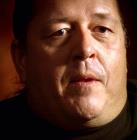
“The portrait that is painted, in many ways fairly, is of Wilson as a Third World dictator, doling out jobs to cronies and creating a vigilante group to intimidate people,” he says. Wounded Knee was selected for the protest because of its symbolic power, having been the scene of an infamous massacre in 1890.
Warrior was brought in as an advisor on the Wounded Knee documentary because of his work on the book Like a Hurricane, a chronicle of American Indian activism, coauthored with Paul Chaat Smith. Both Warrior and Smith worked with the movie’s director Stanley Nelson and screenwriter Marcia Smith, going back and forth on the treatment and screenplay drafts, as well as the rough cuts and fine cut of the film.
“They had only 75 minutes to tell a very complex story,” Warrior says. “As with any telling of history, things get shortened, and we advocated that the complexities not be glossed over. That was the role Paul and I played.”
Warrior and Paul Smith also appeared in Wounded Knee, which was produced by WGBH Television for the American Experience series and will air on PBS on Monday, May 11. Ironically, Warrior says he had been cast to play a small role as a gas station attendant in another movie that screened at the Sundance Film Festival this year—a dramatic feature by an American Indian filmmaker and former student of his. So, if Warrior’s schedule hadn’t prevented him from being in the feature film, he would have made two screen appearances at Sundance.
Warrior says the Wounded Knee standoff ended after two activists were killed and one federal marshal was paralyzed from the waist down, in addition to hundreds of other, less serious, wounds. In the aftermath, residents returned to a destroyed town that looked like a war zone, while about 100 remaining activists were taken to jail. When the dust finally settled, few activists did any prison time and meetings were held in Washington, D.C., to address American Indian concerns.
The Wounded Knee standoff was the climax to a period of American Indian activism, from 1968 to 1973, that brought on considerable changes, such as new directions in federal Indian policy, social programs, health clinics, and improved schools, Warrior says. But the incident also brought out some of the deep-set differences among leaders on the Pine Ridge reservation.
“The wounds that the period exposed were deep,” he adds. “While a new consciousness arose in the period and brought much needed attention to American Indian communities, many of the wounds remain even today.”