University of Illinois researchers are part of a major new center that aims to develop a working biological machine—a complex machine comprised of cells and capable of performing vital functions within the human body.
“This is the next step in synthetic biology,” says Martha Gillette, an LAS biologist and co-director of research for the groundbreaking project. “The idea is to take all of the complexity and richness of biology and use it for new kinds of applications.”
The U of I is a partner with the Massachusetts Institute of Technology (MIT) and the Georgia Institute of Technology in what is known as the Emergent Behaviors of Integrated Cellular Systems (EBICS) Center. EBICS is one of five new Science and Technology Centers approved by the National Science Foundation (NSF) in a merit-based competition.
NSF will invest $25 million over the next five years in the new center. Although headquartered at MIT, its efforts will be evenly distributed among the three primary institutions, with each receiving more than $8 million of the grant.
The center will be widely interdisciplinary, involving, at Illinois alone, researchers from mechanical science and engineering, electrical and computer engineering, bioengineering, chemical and biomolecular engineering, chemistry, cell and developmental biology, neuroscience, animal science, and veterinary biosciences.
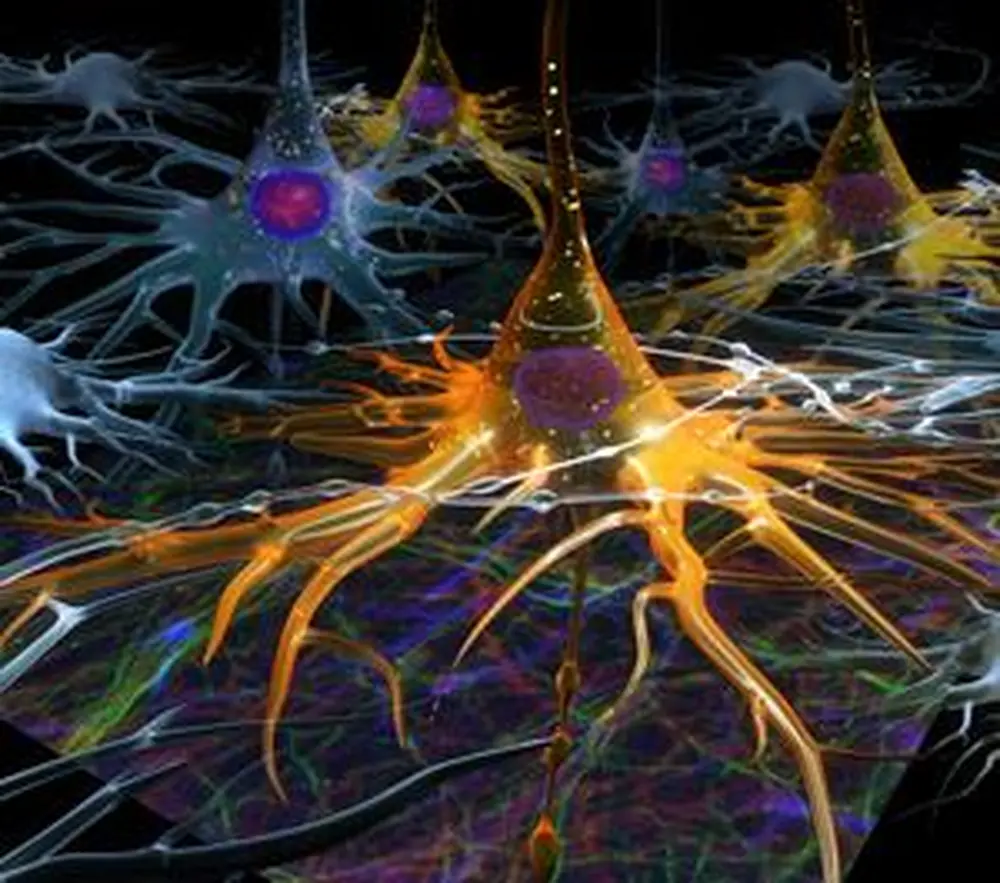
To create a biological machine, the EBICS teams will work with many kinds of cells, but primarily those of three types: neurons, muscle cells, and endothelial cells, which make blood vessels. The neurons will serve as sensors in the biological machine, but they will also need to be able to control the muscle cells to pump chemicals through vessels.
“This means getting different types of cells to grow together and cluster and interact,” Gillette says. “A lot of steps go into that.” To date, researchers around the world have worked extensively on individual cells, but the complex interactions of cell clusters mark new territory. The ultimate idea is to develop biological machines out of one’s own body cells, which would solve problems such as the body rejecting the device.
Research is one part of a three-pronged effort that will also include components in education and diversity and outreach. K. Jimmy Hsia, professor of mechanical science and engineering and associate dean of the Graduate College at Illinois, will coordinate the graduate, undergraduate, and K-12 educational component. Diversity and outreach efforts will be coordinated by researchers at Georgia Tech, who have already formed strategic partnerships with several minority-serving institutions, including a consortium of Atlanta colleges, the City University of New York, and the University of California, Merced.
Biological machines “may sound like science fiction,” Gillette says. “But today’s science fiction is tomorrow’s science and technology.”