Ryan Foley is an expert at studying the oddballs of the stellar universe.
“If it’s exotic or something strange, I’m your guy,” says Foley, a University of Illinois astronomer. “My thing is figuring out the weird ones.”
That was certainly the case back in 2008 when Foley began studying an unusual supernova discovered by an equally unusual amateur astronomer. Caroline Moore, a 14-year-old girl from upstate New York, became the youngest person to ever discover a supernova—an exploding star that briefly rivals the brightness of an entire galaxy.
The supernova was not just unusual because of the age of its discoverer. Foley originally determined that it had odd characteristics—extremely low intrinsic brightness and energy—and he quickly initiated an intense observational campaign to study it. At the time, he was a Clay postdoctoral fellow at the Harvard-Smithsonian Center for Astrophysics, and a press release about the supernova ignited a burst of national attention about the young amateur astronomer.
“She appeared on every news show you could imagine,” he says. Among the shows were Fox News, MSNBC, and, fittingly, the NOVA science show on PBS.
Foley has published two papers on this supernova, with a third one awaiting publication. His first paper, in 2009, detailed the supernova’s quirky characteristics. In fact, he says it remains one of the faintest supernovae ever recorded. He also estimated that the star that exploded, which has about the same mass as the sun, ejected only about a quarter of its mass in the explosion.
In other words, this means that some of the star might have remained intact after it exploded—not all of it was “unbound,” as astronomers describe the process.
“Normally, when we say supernova, we mean the star was completely destroyed,” Foley says, “so you might say that this was just a ‘pretty good nova’—not a supernova.”
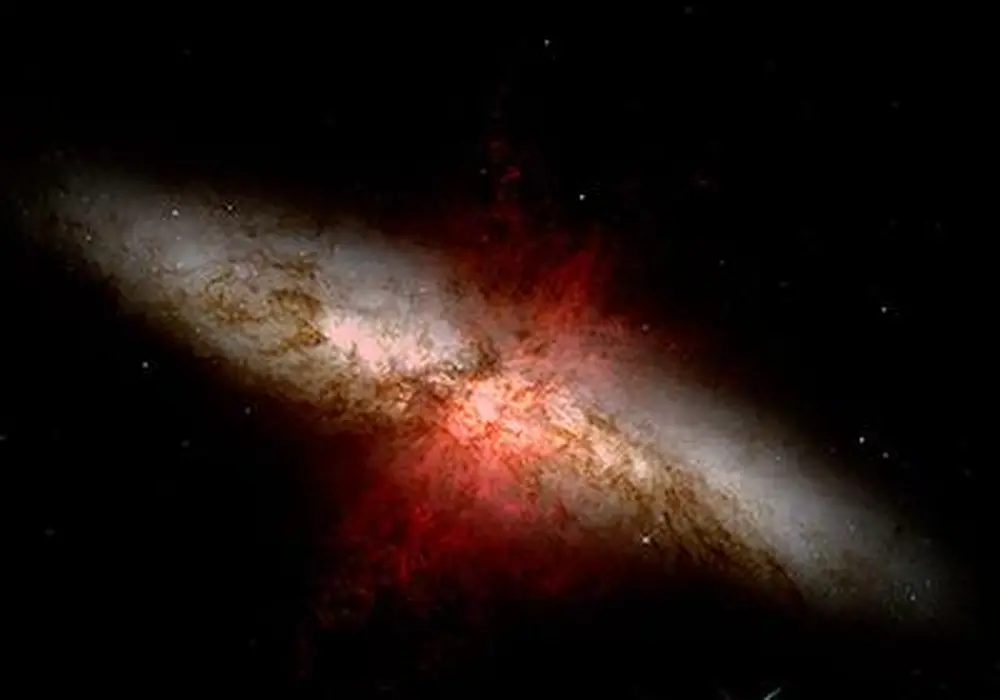
Foley has been particularly interested in low-luminosity supernovae in the Type Iax category, such as the one discovered by Caroline Moore. Type Ia and Type Iax are related ”thermonuclear” supernovae, in which a star keeps fusing heavier and heavier material until it triggers an explosion like a thermonuclear bomb. The main difference is that Type Ia supernovae are much brighter and pack more punch than Type Iax.

The 33-year-old Foley is originally from Holland, Michigan, and he joined the U of I faculty in the fall of 2013. While he says many astronomers cite a formative experience, such as their first telescope as a youth, he did not discover his passion for the stars until his undergraduate years at the University of Mich. He started out as a math major, but he found himself increasingly drawn to astronomy.
“Astronomy has the best questions,” he explains. “Where did we come from? How did the universe come to be? What is the ultimate fate of the universe? These are the grandest of questions.”
Most recently, Foley and other astronomers became the first to match Hubble telescope images of a thermonuclear explosion to the image of the star before it exploded. This kind of before-and-after information is important because it can shed light on how stars are born and how stars die, he says. Just as it helps to know someone’s parents to fully understand a person, he says it’s also important to understand the parentage of a supernova; it’s important to know what kind of system produced the exploding star.
These before-and-after images “usher in a new era for thermonuclear supernovae,” according to Foley. “Now, instead of conjecture of what can produce this type of supernova, we know what produced it.”
The supernova in question was observed in 2012 and came from a binary—or two-star—system that consisted of a helium star and a “white dwarf.”
“A white dwarf is the core of a star similar to our sun that expelled its outer layers after it stopped vigorously fusing material,” Foley says. “A white dwarf is about the size of the Earth, and it’s still very hot, but it’s like a hot ember slowly cooling. We think a companion helium star was transferring material over to the white dwarf, and the white dwarf built up mass until eventually there was an explosion.”
What’s more, Foley says their results confirm some of the predictions made in the 1990s by Icko Iben, the renowned U of I astronomer who is part of LAS’s Centennial Gallery of Excellence. For instance, Iben once predicted that a two-star system made up of a white dwarf and helium star would create a weak supernova, “and this is what we’re finding,” Foley points out.
He anticipates that they will continue to probe the 2012 supernova with the same intensity they devoted to the 2008 supernova discovered by Caroline Moore.
“We’re just starting to collect data,” Foley says, “so we’re going to ride this for awhile.”