
Step by step, the University of Illinois has been building one of the best academic programs in Hindi in the nation. In its latest improvement, however, students and the instructor don’t even have to leave their seats.
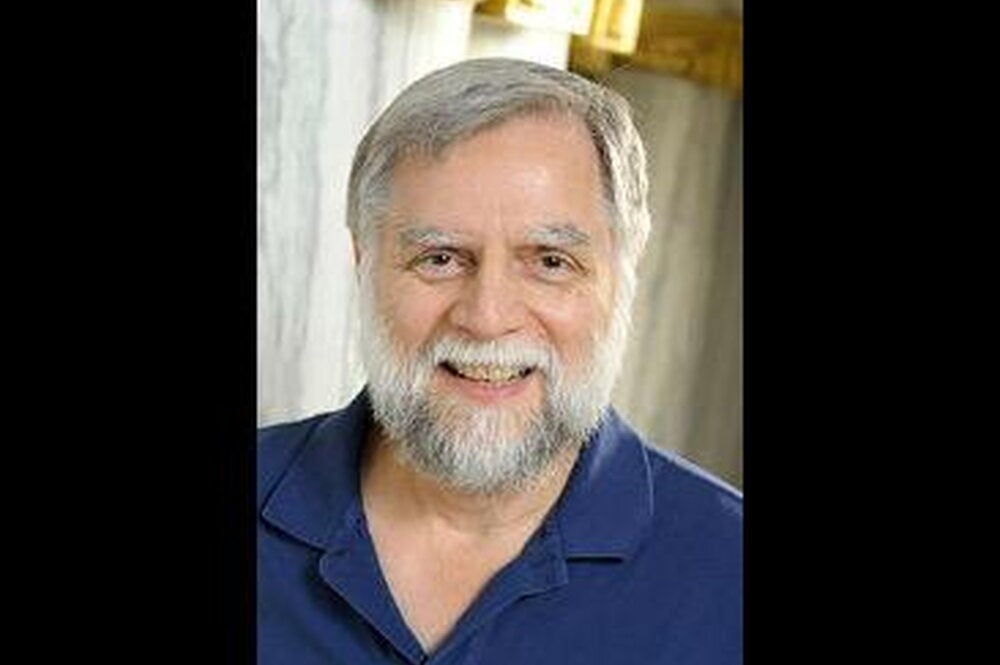
This past fall, Mithilesh Mishra, senior lecturer in the Department of Linguistics and director of programming in Hindi and Urdu, taught the first-ever virtual “Advanced Hindi” course in the country. The “classroom” for the 13 students who enrolled was nothing more than their laptop computers, connected by camera and audio to Mishra as he taught from his office.
For the most part, the cutting-edge virtual class was a success, aside from a few technical hiccups—including the humorous irony of Mishra being forced to revert to the pre-Internet era and accept handwritten assignments, because most students in the U.S. are not used to typing in Hindi. In general, however, Mishra says the virtual format allowed for more flexibility, creativity, and discussion than ever before.
As if attending class from their dorm rooms or wherever they could find an Internet signal wasn’t convenient enough, class was held on Tuesday and Saturday evenings, leaving daylight hours free. And why not? Without having to worry about reserving a classroom, Mishra merely put it to a vote and those were the times students felt were most convenient.
But even if they couldn’t log on at that time, all the classes were recorded, with other materials posted online, so that the students could download it later. In the virtual format, students could absorb their lessons in Hindi at 2 a.m., or on the treadmill through headphones, or in the coffee shop, if that’s what they wanted.
There was no lessening of Mishra’s expectations or standards. In fact, students in the virtual class were expected to devote more of their own time to the course than normal, as they viewed videos and other course materials at their own convenience instead of spending class time to watch them. Mishra calls it the virtual course’s greatest advantage.
“We’re able to compress a 15-week course into eight weeks,” he says. “I assign films, excerpts from television programs, CDs, and other material to do on their own. It’s a standing requirement. You watch when you get a chance, and it doesn’t take class time. Students like it.”
The University of Illinois has been a leader in Hindi. It was the first university to offer a minor in Hindi, Mishra says, and he created the first “Business Hindi” course in the country. He adds that this latest endeavor was a hit from the start.
Mishra first considered it while he was teaching Hindi at the South Asia Summer Language Institute (SASLI) in Madison, Wis., where there was such demand for “Advanced Hindi” that students asked if he could teach the course online. The idea never materialized at SASLI, where he teaches during the summer, but “I felt bad turning them down all the time,” Mishra bemoans. So he brought the idea before his department chair, administrators in the College of LAS, and campus computer support, and received enthusiastic support.
When registration opened for the first virtual “Advanced Hindi” course in the fall 2014 semester, Mishra expected five students to sign on. Then he learned how appealing the idea of a virtual course could be.
“Once the news kind of spread that there was this online course, suddenly there were 11 students almost overnight,” he recalls. In the end, there were 13 students for the virtual “Advanced Hindi” course, including one from Cal-State Northridge, in addition to his traditional class. In all, 22 students were enrolled in “Advanced Hindi,” making it the largest “Advanced Hindi” program in the United States.
It also became a bit unwieldy. By the end of the semester, Mishra and the department had decided that from now on, all “Advanced Hindi” courses would be taught virtually.
He’s expanding the concept to other Hindi courses as well. He wants his “Business Hindi” course to be virtual by the fall 2015 semester. His first- and second-year Hindi classes will remain under the traditional classroom format for now, as he feels beginning students benefit best by being in the same space as the instructor, but he won a grant from the U.S. Department of Education’s Undergraduate International Studies and Foreign Language Program to blend a virtual aspect into the beginning courses as well.
He’s even thinking about creating an “asynchronous” virtual course, where students would not need to be logged on at the same time as the instructor, instead downloading materials and recordings on their own time as they progressed. This would allow students from everywhere in the world to enroll, Mishra points out.
But that’s getting ahead of himself. Last fall, he learned that for all his students’ technical prowess, they wanted to move slowly into the virtual classroom, too. Mishra recalls how one day he asked if he could turn off the camera, so that students could only hear his voice.
“The students say no, they want to see me,” Mishra says, with a laugh. “I think that they are transitioning from the in-class mode, too. They feel somewhat disconcerted if they don’t see the instructor’s face. So they said, ‘No, please keep the camera on.’”