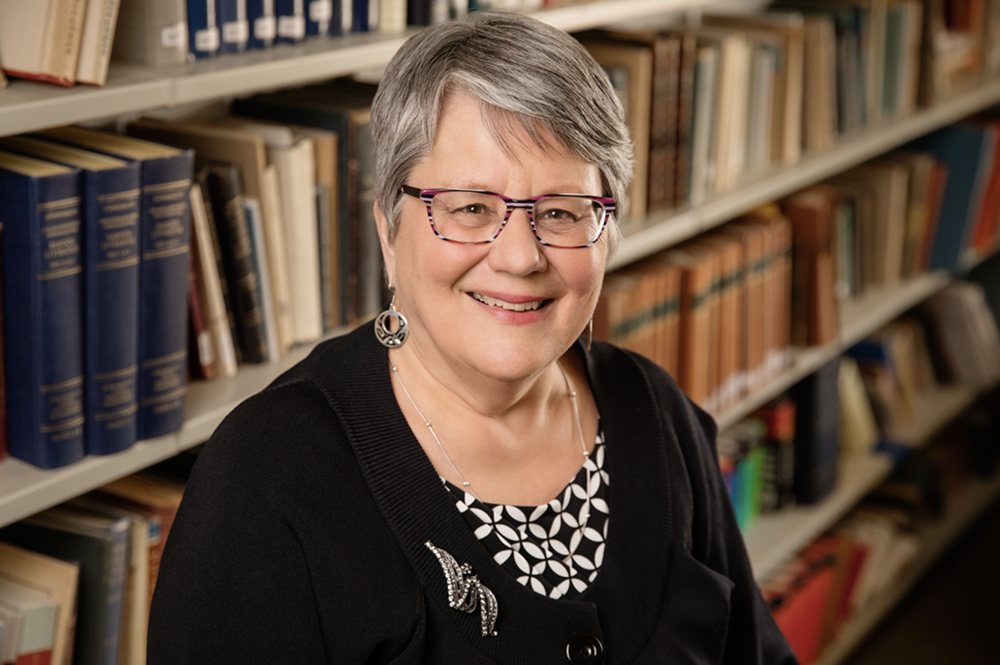
Mara Wade, a University of Illinois professor of Germanic languages and literatures, has been awarded a Getty Residential Scholar Grant. The scholarship allows Wade to spend the 2018 fall semester at the Getty Research Institute working on her book “The Politics of Culture: Public Monuments in the Free Imperial City, Nuernberg 1521-1620.”
Since 1985, the Getty Research Institute has selected scholars, artists and cultural figures to work in residence on projects related to its annual research theme. The theme for the fall 2018 term is “monumentality,” which will address fundamental questions of art and architectural history such as size and scale, as well as how monumentality is embodied by various cultures, its role as a tool for nation building and the subversive potential of monument-making.
Wade’s research is based on a volume that she recently identified, a 17th century biography by the humanist Georg Rem of the Free Imperial City of Nuernberg as told through its public monuments. The city is located in Germany.
“Rem’s remarkable volume is a missing link that connects the cultural politics of the city’s elite with its civic art program,” the project description says. “It is the only known work that situates the allegories and emblems of one of the most magnificent civic spaces in the Holy Roman Empire within the context of public art and civic ideology. This hybrid print and manuscript volume describes Nuernberg’s program of civic monuments across an entire century, outlining a consistent cultural policy that stretched back to the time of Duerer. In so doing, Rem advanced a radical argument: These texts and images were not merely the products of a stable civil society, they created it.”
While at the Getty Research Institute, Wade will be able to make use of Getty collections and participate in the intellectual life of the Getty Center and the Getty Villa.
She is the principal investigator for Emblematica Online, a multi-year international digital humanities research project funded by the National Endowment for the Humanities, and her research has a strong focus on digital humanities.