Editor's note: The Spurlock Museum of World Cultures was recently awarded a Team Award for Excellence in Public Engagement. Read about the award.
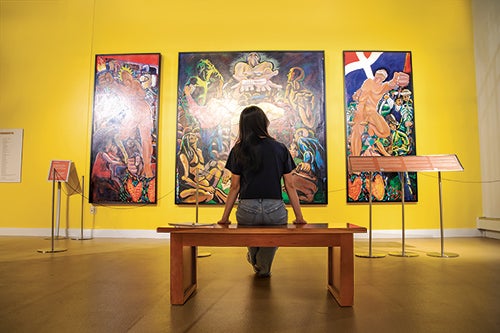
Who is a museum for? At the university’s Spurlock Museum of World Cultures, the answer is: All of us. Illinois undergraduate and graduate students and faculty and staff: of course. K-12 students and teachers: absolutely. Community members and organizations: very much so. Descendent communities whose ancestors created the objects now held in the museum’s collection: definitely.
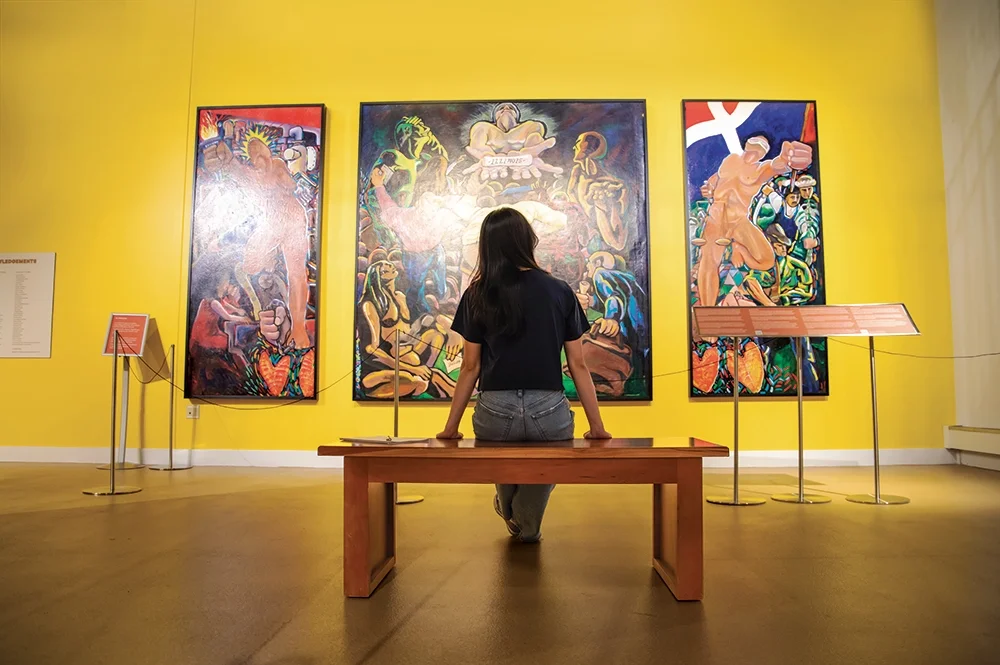
Spurlock began as three collections on the fourth floor of Lincoln Hall, but by the 1960s, the scope had broadened to encompass world history and culture. A generous donation from alumnus William Spurlock (BS, business, 1924) led to the construction of a modern, purpose-built facility, which opened on the east side of campus in 2002. Today, nine permanent exhibits represent historical and contemporary peoples from around the world, and additional special exhibits bring new perspectives, events, and programs to the museum.
Each year Spurlock serves over 40,000 visitors and hosts more than 19,000 schoolchildren and university students as part of tours and educational programming. The museum’s team has collaborated with more than 80 university units and organizations, 71 community organizations and agencies, and more than 31 K-12 schools to create programming and exhibits.
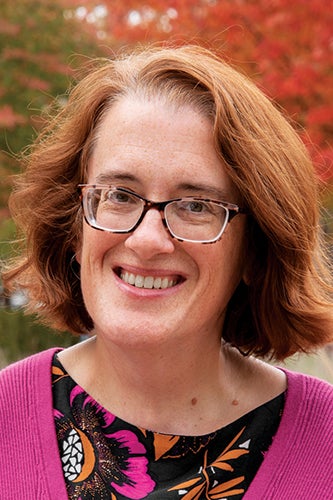
“We’ve always been a museum about people—world cultures—but we needed to think not just about history and anthropology as visitors might have encountered those topics in school but also about the people closest to us in terms of who we serve,” said Beth Watkins (BA, history, ’96; MS, library and information science, ’02), the museum’s manager of exhibit interpretation and visitor experience. “We needed to support our neighbors seeing themselves in our museum and on campus.”
One example was the exhibit “Sewn in Memory: AIDS Quilt Panels from Central Illinois,” which featured more than a dozen quilt panels created in the 1980s and early 1990s. Curation involved multiple collaborators, including the Greater Community AIDS Project of East Central Illinois, which holds the panels and assisted with research; the university’s History Harvest course, which engages students in gathering historical stories and documents from local communities; and Illinois Public Media and students from the College of Media, who created video vignettes.
Spurlock director Elizabeth Sutton also cited the museum’s partnership with the Bizhiki Culture and Dance Company. The group, which promotes understanding of Indigenous culture through performances and presentations, comes to Spurlock once or twice a year. Members of the group also curated the ongoing “Welcome to the Pow Wow” exhibition, which since 2023 has helped to immerse visitors in the different elements of pow-wows, from drumming, to dancing, to regalia.
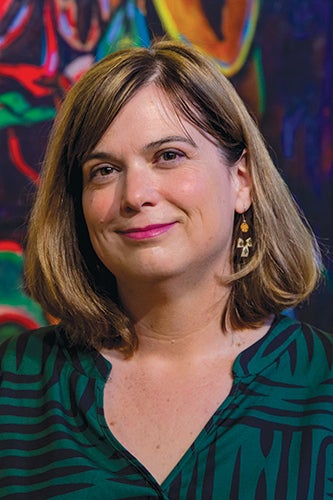
“For their past few visits, we have offered interactive learning experiences where visitors could come and learn how to do beadwork, play Native American games, see up close how Native people process sap to make maple syrup, and other activities,” Sutton said. “They could interact with and talk to culture keepers and artists and learn from them directly. Our visitors reported that they really loved the opportunity to converse, interact, and learn.”
Opportunities like that are at the heart of Spurlock’s mission.
“I think most of us imagine that classrooms are where learning happens, but for most of us, important learning happens at home, from peers, in our community, and informal learning environments like museums,” said Sutton. “Museums allow people to explore and delve into subjects that aren’t represented in textbooks.”
And as you might expect for a museum that is part of the College of LAS, there is a strong connection to both undergraduate and graduate education. As manager of academic programs, Abigail Padfield Narayan works with faculty to provide experiences that supplement what students are learning in the classroom. She particularly enjoys working with history, medieval, and early modern English literature courses.
“I get to geek out about the Medieval and Early Modern world and talk about the Thomas Boylen brass rubbing and what that can tell us about his death and the area around Hever Castle with others,” she enthused. “My other favorite has been the work I did with [classics professor] Dan Leon a few years ago when he had students come in to create papyrus sheets. How often do you get to try and figure out the best way to make papyrus?”
Coursework isn’t the only thing that brings students to Spurlock. Many undergraduate and graduate students also get hands-on experience as members of the museum’s cadre of student workers.
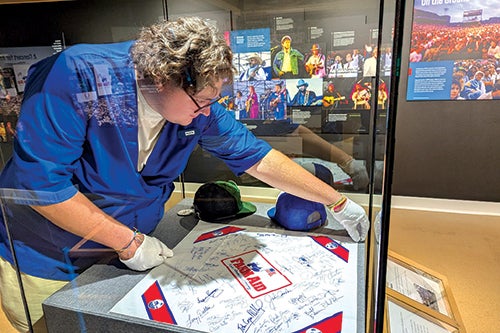
Senior archaeology and German major Aiden Brinkmann works as an artifact preservation assistant, helping to protect and care for Spurlock’s artifacts and preparing objects for visits and exhibitions. “Working at Spurlock has also taught me lessons that go beyond the specifics of my collections work,” Aiden said. “The staff at the museum takes great care in the ways they treat people and objects, and observing these relationships informs the way I think about museums and their role.”
What is a museum for?
“Spurlock serves as a nexus between the campus and community,” Sutton said. “We provide a hub for community engaged research, creative and experimental museum practice, and a space for people engage in dialogue with each other. We create a space for sharing, connecting, understanding, struggling, and celebrating.”
600 S. Gregory St., Urbana
T: noon-5 p.m.
W, Th, F: 9 a.m.-5 p.m.
Sat: 10 a.m.-4 p.m.
Sun: noon-4 p.m.
Mon: Closed
Editor's note: This story first appeared in the Spring 2026 issue of The Quadrangle.