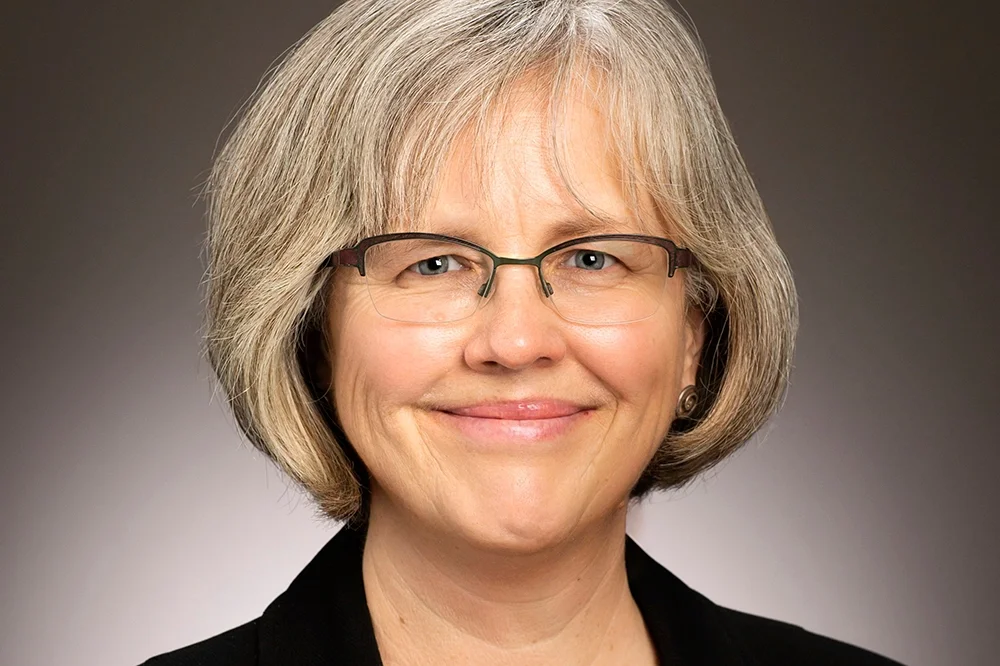
University of Illinois Urbana-Champaign history professor Kristin Hoganson has been awarded a 2024 National Endowment for the Humanities Fellowship.
“An NEH fellowship is a prestigious and highly competitive award that recognizes stellar scholarly contributions in the humanities. Congratulations to Professor Hoganson on receiving this fellowship. We are fortunate to have her as part of the Illinois faculty,” said Provost John Coleman.
The NEH awarded $22.6 million in grants for 219 humanities projects across the country, including 78 fellowships. The fellowship program supports advanced research in the humanities, and recipients produce articles, books, digital materials or other scholarly resources. NEH Fellowships are competitive awards granted to individual scholars pursuing projects that embody exceptional research, rigorous analysis, and clear writing.
The NEH has received an average of 1,058 applications per year for fellowships in the last five rounds of competition, according to the NEH website. During that time, it awarded an average of 73 fellowships per year for a funding rate of 7%, making the fellowships among the most competitive humanities awards in the country.
Hoganson’s project, “Infrastructural Power: Engineering Empire in the Caribbean Area, 1898-1929,” examines the building boom of the early 20th century and the extraordinary magnitude of U.S. involvement in engineering projects from Mexico to Venezuela and in Cuba, Puerto Rico, Haiti and the Dominican Republic. Hoganson will look at the politics of road and railroad building, harbor improvements, canal construction, and the building of hydroelectric plants and electrification systems. She is especially interested in how U.S. engineers — both private sector and military — shaped the Caribbean region in ways conducive to advancing U.S. interests, including displacing European rivals, extracting wealth, tying regional economies to the U.S., and enabling U.S. military access, white settlement, and tourism. In addition to undergirding U.S. power in the Caribbean area, these projects had a major footprint, affecting daily lives, working conditions, labor movements, Indigenous communities, nationalist politics, and ecologies. Hoganson plans to use her NEH Fellowship to conduct research on military engineering for combat and occupation purposes.
In 2019, Hoganson was named the Stanley S. Stroup Professor of United States History.
The NEH is an independent federal agency and one of the largest funders of humanities programs in the U.S. It supports research and learning in history, literature, philosophy, and other areas of the humanities by funding selected peer-reviewed proposals from around the nation.