“There’s a thread you follow,” William Stafford wrote in the poem “The Way It Is,” and for Dipali V. Apte, that thread may be poetry, a quiet, persistent line running through childhood, through her years at U of I, through a career in ophthalmology, and back again in the form of the Dipali V. Apte Poetry Award.
Apte (BA, ’84, philosophy; BS, ’84, bioengineering; PhD, ’92, philosophy; MD, ’93) founded the award in the Department of English in 2022 to support undergraduate student poets and honor the literary tradition that inspired her, even in her medical career.
For Apte, poetry was never a phase. “I have always been interested in poetry since I was a child,” she said. “I never made it a profession, but kept it as an avocation. But I wrote poetry for years… through college, through med school, through grad school… all the way up to now.”
Apte is an ophthalmology subspecialist, doing clinical work and surgery, and like many people who choose demanding professions, she found that the work asked for nearly everything. “When you get into medicine, medicine can be very time-consuming and requires a lot of your creative energy as well,” she said. “So I wasn’t writing as much in the last few years.”
And yet the impulse never vanished. The poet remained inside her, she said, attentive to language, to sound, to compression, to the mystery of transformation. That sensibility was nurtured in part at U of I, where Apte took a poetry course in her senior year that stayed with her long after graduation.
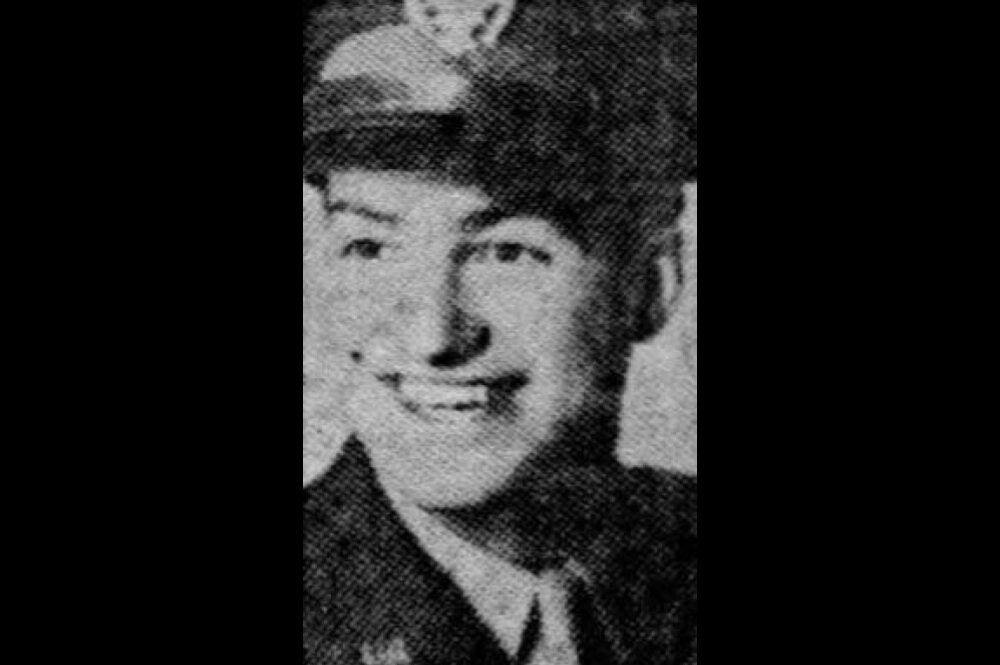
“One of my senior-year courses was in poetry, and I really enjoyed that,” she said, still remembering her English professor, Laurence Lieberman, with affection and clarity. Lieberman was a professor of English at the U of I from 1968 to 2009, poetry editor of the University of Illinois Press from 1971 to 2009, and the author of fifteen books of poetry
“Laurence Lieberman was our poetry professor,” she said. “He was inspirational in that way.”
Apte also won a poetry contest while she was a student, a moment of recognition that remained with her long after she left campus. Over time, the memory of that accomplishment deepened into a desire to create the same opening for someone else.
“I thought it would be really nice to continue the poetry tradition that I experienced and enjoyed and partook in,” she said. “I thought this would be a way to give back.”
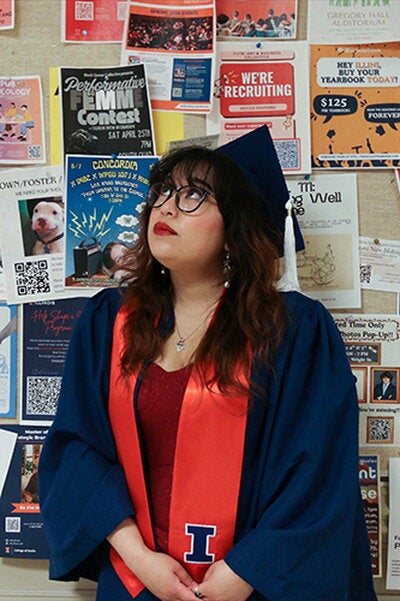
This year’s recipient of the award was Erica Such, a senior in creative writing. She said that she was “extremely grateful to Dr. Apte’s generous contributions that will shape future generations of writers.”
"We live in a time where the arts are not only devalued at a national level through the defunding of creative institutions, but we discourage young people from pursuing their artistic passions because it isn't as lucrative as other professional fields,” Such said.
“This makes awards such as the Dipali V. Apte Poetry Award so crucial to the development of writers like me. This award validates my craft and empowers my voice during a time where art is deemed a luxury and not a necessity. I plan on using this award to pursue an MFA in creative writing and further sharpen my craft."The Dipali V. Apte Poetry Award is not only a tribute to Apte’s student years.
“It’s in honor of two people that influenced me to write poetry and value words,” she said. The first was her late father, Vishwas J. Apte (MBA, ’80), also a physician and clinical associate professor at University of Illinois Chicago.
“He had a pretty active artistic life, in that he really enjoyed theater, art, and had a love for words,” Apte said. “He taught us the dictionary was a really important part of your education. If you didn’t know a word, you had to go look it up.”
The second was her late paternal grandmother, Sharada J. Apte. “She, even through the toughest of times, found a way to write and do art,” Apte said. “She and her writing left a strong impact on me as well.”
That lineage helps explain why Apte speaks of poetry as a necessity. For her, poems are not decorative; they preserve attention and carry feeling. She admires how much they can hold in so little space.
“It’s really important that we keep things like poetry alive,” she said. “I think it carries on ideas and words that matter.”
Medicine, Apte added, could be “a jealous master,” but her training in the Medical Scholars Program at the U of I encouraged merging of dual disciplines. She continued to combine the arts with the sciences.
“But the soul of medicine is, I think, encapsulated by poetry in many ways for me,” she said. She draws an analogy between poetry and vision.
“Experiences or observations get transformed, transmuted, molded into yet another set of ideas,” she said. “They capture that experience or the observations or the emotion or an intellectual thought … from that to words on a page to understanding.”
She sees a link between poetry and her medical treatment of the eyes.
“There’s energy transformation,” she said. “In vision, you have light energy that gets turned into biological energy, which is partly chemical energy, then that’s turned into electrical energy, and then that gets turned into recognition of having experienced something visual. It’s pretty remarkable.”
As she left Illinois, medicine did not erase poetry, but gave her another language for wonder. Even when Apte wrote less, she never stopped thinking like a poet. She mentioned Mary Oliver and William Stafford as poets who continue to resonate with her, and she also named E.E. Cummings among the writers she has long admired.
When discussing poems in different languages, she brings up Marathi, an Indian language she knows and appreciates, especially for its sound.
“I really enjoy the spoken Marathi,” she said. “The alliteration is different, so it’s very interesting to hear that. It’s different from English.”
The density of poetry is remarkable, Apte added. “Poetry carries so many nuances in each individual word, in the context that the word is in and how it’s presented and the sound of it,” she said. “It’s very, very powerful. There’s a lot happening.”
That is also what Apte hopes the award will honor at the U of I: a breadth of experience and imagination.
“My job as the person founding the award is to have had that intention,” she said. “The intention was to reward students who have endeavored in poetry.”
She said she hopes the award continues to recognize “diverse voices, people who have different and interesting things to say.”
Apte thinks especially of places and lives that can be overlooked, including rural Illinois and small farming communities. “I grew up in Illinois, and so in rural Illinois,” she said. “Those are also voices that you don’t always hear. Small-town USA, farming communities. It will be important to have those different voices heard.”
“I hope that it will encourage people to write and that it will recognize them,” she said. “I think it’s important in this time and age that we not forget it.”
Apte’s advice to student writers carries the same spirit. She urges them to live expansively, not narrowly-- to move beyond the boundaries of a major, a discipline, or a career plan.
“Experience as much as you possibly can,” she said. “Go to evening lectures. Take courses that are outside of your area of discipline. Experience the wider world that you can, both extracurricular and intercurricular. Because it just broadens your horizons.”
That kind of education, she added, cannot be outsourced.
“They can’t take that away from you,” she said. “You can’t duplicate it by doing a search. They can’t teach you how to think. They can’t help you to problem-solve. You have to be able to do those things.”
She added some advice about writing: “Give yourself a break, walk away from what you’re struggling with, and come back to it,” she said. “Focus on a walk, nature, doing something physical, cooking, something completely different. And then sometimes when you’re in downtime, the words will come to you.”
The award she created at the U of I is a way of passing forward the encouragement she once received, she said, and a way of saying that poems still deserve a place in the life of the university, and in the life of the world.
When poems come to you, she said, be ready.
“When you are inspired, write it down—jot it down—because sometimes those ideas don’t come back,” Apte said.