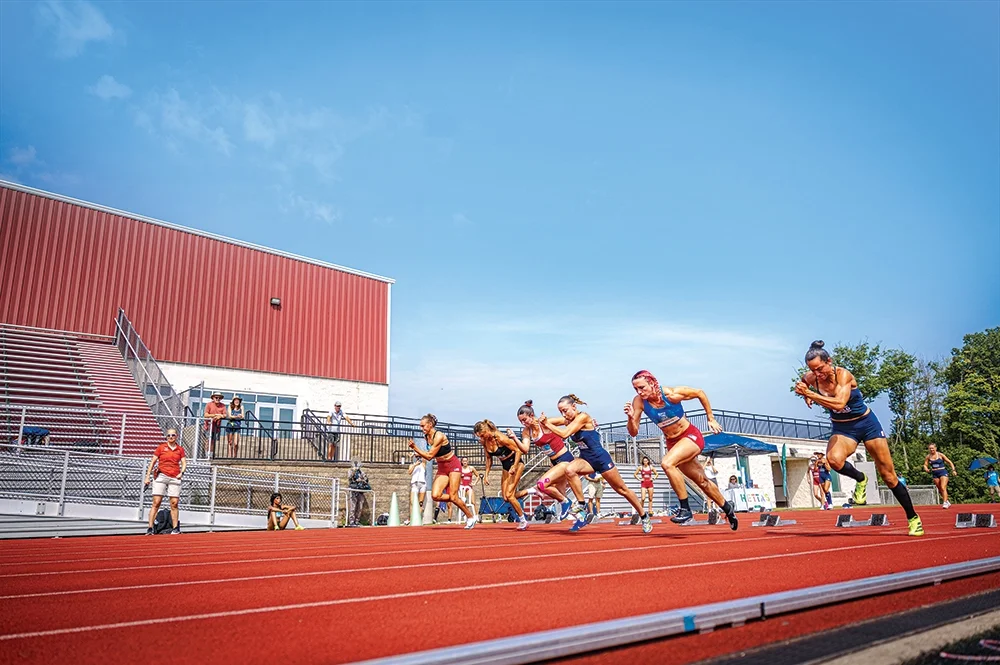
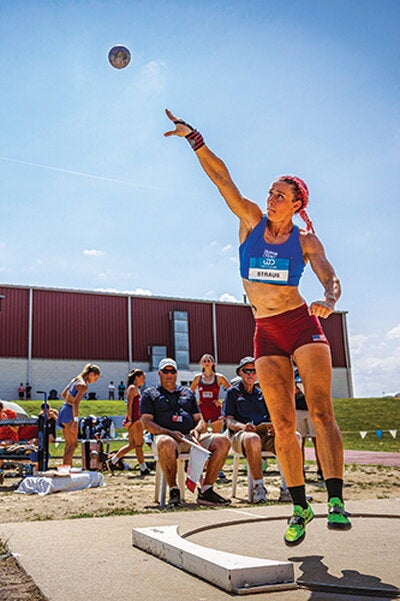
Katie Straus crossed the finish line of the 1,500 meters exhausted.
After two days and nine previous events of sprinting, jumping, throwing, and vaulting, the final race of the decathlon is less about speed than endurance — pushing forward even as the body begins to break down. By that point, Straus said, the hardest part isn’t just physical.
“The worst part about the 1,500 is that it’s slow enough that you can think,” she said. “You start thinking about how much everything hurts. Then, you realize you still have two and three-quarters laps to go.”
In many ways, this moment — pushing through exhaustion with no real choice but to keep going — mirrors the reality of competing in the women’s decathlon itself, where athletes are not only tested across 10 events, but are also helping push the sport toward recognition.
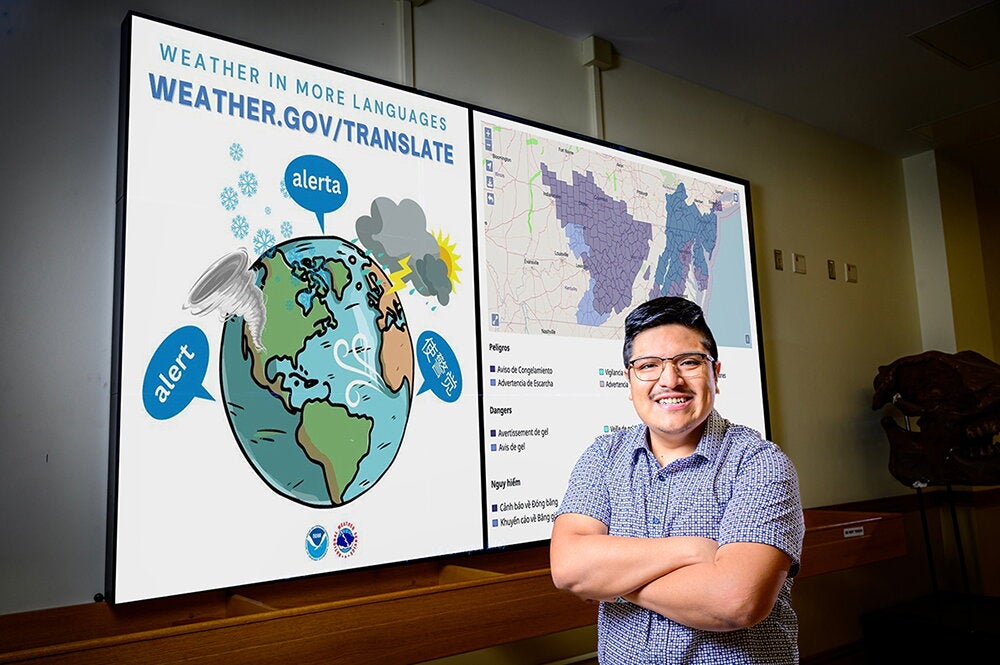
At the 2025 Women’s Decathlon World Championships — currently the highest level of competition for the event — Straus earned the silver medal, delivering one of the strongest performances of her career. A PhD student in the Department of Climate, Meteorology & Atmospheric Sciences at the University of Illinois Urbana-Champaign, she balances that level of competition with graduate research, academic responsibilities, and a training schedule largely built on her own, making the moment even more meaningful as she competed in front of family and friends in her home state of Ohio.
The result was both validating and emotional. But as meaningful as that moment was, it may ultimately pale in comparison to what Straus and other athletes are working toward: the day the women’s decathlon is recognized on the Olympic stage.
A test of the “greatest athlete”
The decathlon has long been considered one of track and field’s ultimate challenges. Spanning two days and 10 events — from sprints and hurdles to throwing events, jumps, and distance running — it is designed to determine the sport’s greatest all-around athlete.
Women, however, have historically been excluded from the event.
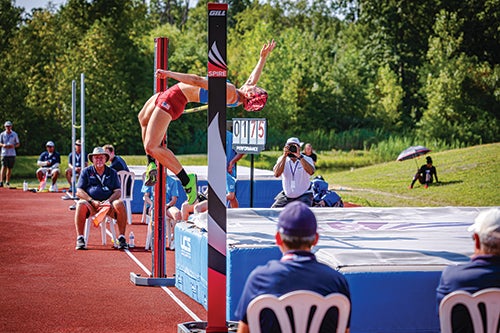
For decades, outdated assumptions about women’s physical limitations restricted which events they could compete in. Instead, female athletes compete in the heptathlon, a seven-event competition that omits the pole vault, discus, and 1500m.
While women now compete in each of those events individually, the decathlon itself remains absent from the Olympic program — a gap that has increasingly drawn attention from athletes and organizers alike.
Among those working to change that is Lauren Kuntz, founder of World’s Greatest Athlete, the organization that coordinates the Women’s Decathlon World Championships.
“The decathlon is the event that crowns the world’s greatest athlete,” Kuntz said. “What message are we sending when we say it is an event exclusive to men?”
Straus has felt that disparity firsthand.
“There is a subtle undertone to the heptathlon that the world’s greatest female athlete… is still less than men,” she said. “It’s fewer events, shorter distances, and that’s rooted in outdated reasoning.”
In response, athlete-led competitions have begun to fill the gap. Since 2018, women’s decathlons have been held intermittently across the United States, often without official recognition.
In 2023, Straus competed in one of those events — a U.S. Women’s Decathlon Championship — simply because she wanted the chance to try it.
“Even if I only do one in my life, I’m going to do it just to say I did,” she said.
She ended up winning.
Since then, those efforts have expanded into more formalized international competition, including the Women’s Decathlon World Championships — where Straus won silver in 2025 — drawing athletes from multiple countries and steadily building the sport’s visibility.
Building a training system from scratch
Straus’ path reflects the current reality of the sport.
When she arrived at Illinois from the University of Cincinnati in 2022 to begin graduate school, she no longer had access to the facilities, coaching staff, and structured training environment that come with NCAA athletics — resources that many male decathletes continue to rely on after college.
Instead, she had to build her own system.
After moving to Champaign, Straus searched for local track clubs and eventually connected with a facility that could offer her space to train. From there, she pieced together support — working with different coaches for specific events when schedules allow, and relying on her own planning the rest of the time.
The process is time-consuming, expensive, and often uncertain.
Training for the decathlon requires equipment for multiple throwing events, including shot put, discus, and javelin — items that can cost hundreds or thousands of dollars. A competition javelin alone can approach $1,000.
A typical week involves six days of training. On her busiest days, Straus might complete three or four workouts, totaling four to five hours.
She often starts with a morning lift, spends the day on campus conducting research or academic responsibilites, then returns later for additional training sessions. This kind of fragmented, self-directed training schedule is not unusual in the women’s decathlon — it is, in many ways, a symptom of the sport’s lack of formal infrastructure.
“Athletes need something to train for,” Kuntz said. “If there are no national or world championship opportunities, it’s impossible to build a base of athletes. That’s the void we’re trying to fill.”
Kuntz said athletes like Straus are central to that effort.
“Athletes like Katie are what will ultimately drive the acceptance of the women’s decathlon,” she said. “How can you see her commitment, the way she balances academic and athletic excellence, and not want to support that?”
Pushing the sport forward
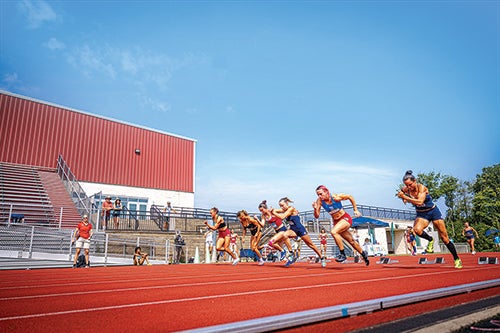
Athletes and organizers are working to build the foundation needed for the women’s decathlon to gain broader recognition. Right now, there is no clear path to Olympic inclusion.
World Athletics has indicated that adding the event would likely require replacing the heptathlon rather than adding a new one, a reality that complicates support. At the same time, national governing bodies are often reluctant to invest in events outside the Olympic program. The result is a difficult cycle: Without competitions, it’s hard to build a base of athletes, but without athletes, it’s difficult to justify competitions.
For now, progress depends on growing the sport from the ground up — expanding participation, increasing visibility, and building support across countries.
Straus sees that effort reflected in the community.
“It’s probably the most camaraderie-focused athletic community I’ve experienced,” she said. “Everyone still wants to win and set personal records, but there’s also this feeling of ‘we’re all in this together.’”
For Straus, the goal is both personal and collective.
“It would feel like the closure of that gap,” she said. “It’s the last event where women and men don’t compete equally.”
“I’d love to compete in it myself,” she added. “But even if that timeline doesn’t work out for me, it would be incredible to see how good women could get with the right infrastructure and support.”
Kuntz said that long-term vision is what continues to drive the athletes competing today.
“Every athlete out there is pushing herself to the limit not just to discover her potential, but so that a little girl today will one day have the chance to discover her own potential on the Olympic stage.”
Editor's note: This story first appeared in the Spring 2026 issue of The Quadrangle.