
The Art Institute of Chicago and a University of Illinois historian have teamed up to create an unusual exhibition focusing on the idea of "otherness."
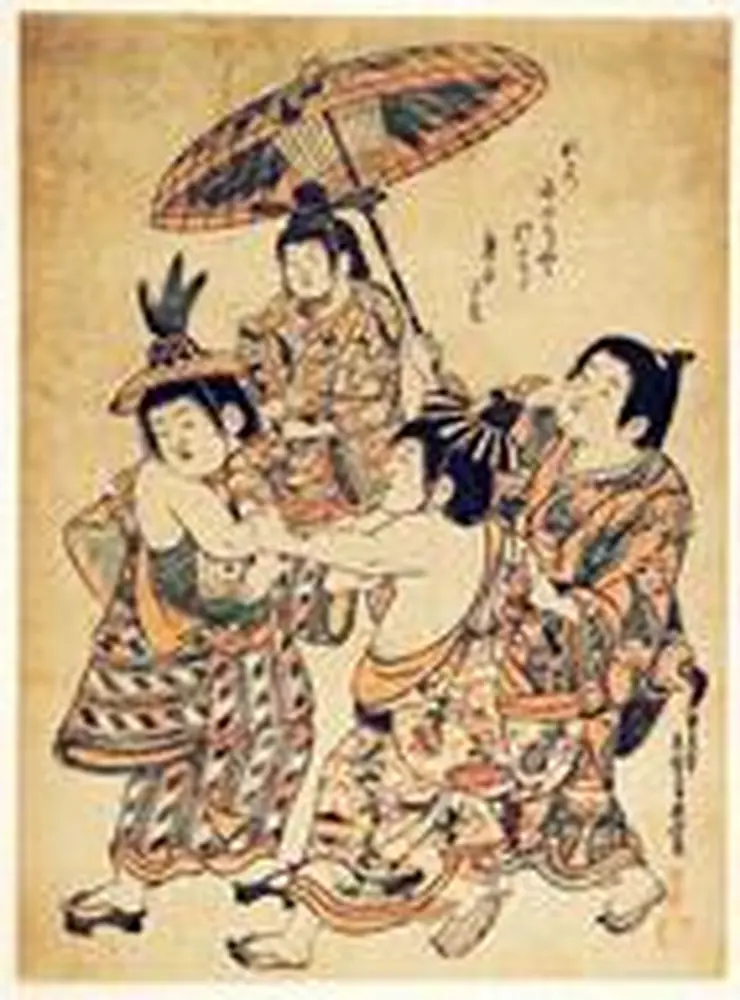
The exhibition, titled "Foreign Faces in Japanese Prints," is guest-curated by Ronald Toby, a historian of premodern and early modern Japan. The exhibit runs from January 20 to April 8 in Gallery 107 at the Art Institute. All of the 35 prints are drawn from the institute's Clarence Buckingham Collection."
According to Toby-whose current research interests include the representations of "the foreign" in popular culture-the Japanese of the Edo Period (1600-1868), "like most people around the world, found foreigners fascinating, and woodblock print (ukiyo-e) artists and publishers were only too happy to accommodate the public's hungry appetite.""
In fact, from the 17th century to the early 19th century, ukiyo-e masters-including Hishikawa Moronobu, Okumura Masanobu, Suzuki Harunobu, Kitagawa Utamaro, and Katsushika Hokusai-"found foreign faces an irresistible subject.""
Whether comic or dangerous, exotic or erotic, the representations always served "as mirrors to identity," Toby says."
In the Edo period artists produced scenes of Chinese and Koreans, Portuguese and the Dutch, in the port of Nagasaki, on the streets of Kyoto and Edo, and on the highways in between.
Since Nara times (710-784), artists portrayed foreigners in foreign settings-real or imagined-in conventions clearly differentiating "Chinese" figures from "Japanese."
"Yet before the 16th century Japanese artists rarely showed foreigners in domestic Japanese settings," Toby says.
The arrival of the "Nanban"-Iberian "Southern Barbarians"-changed everything, Toby says. Nanban art portrayed Japanese cityscapes "with foreigners of every stripe."
"The Nanban craze and the invasion of Korea in the 1590s led Japanese artists to depict foreigners on the streets of Japanese cities and the highways connecting them, as well as invoking Chinese figures of both history and legend."