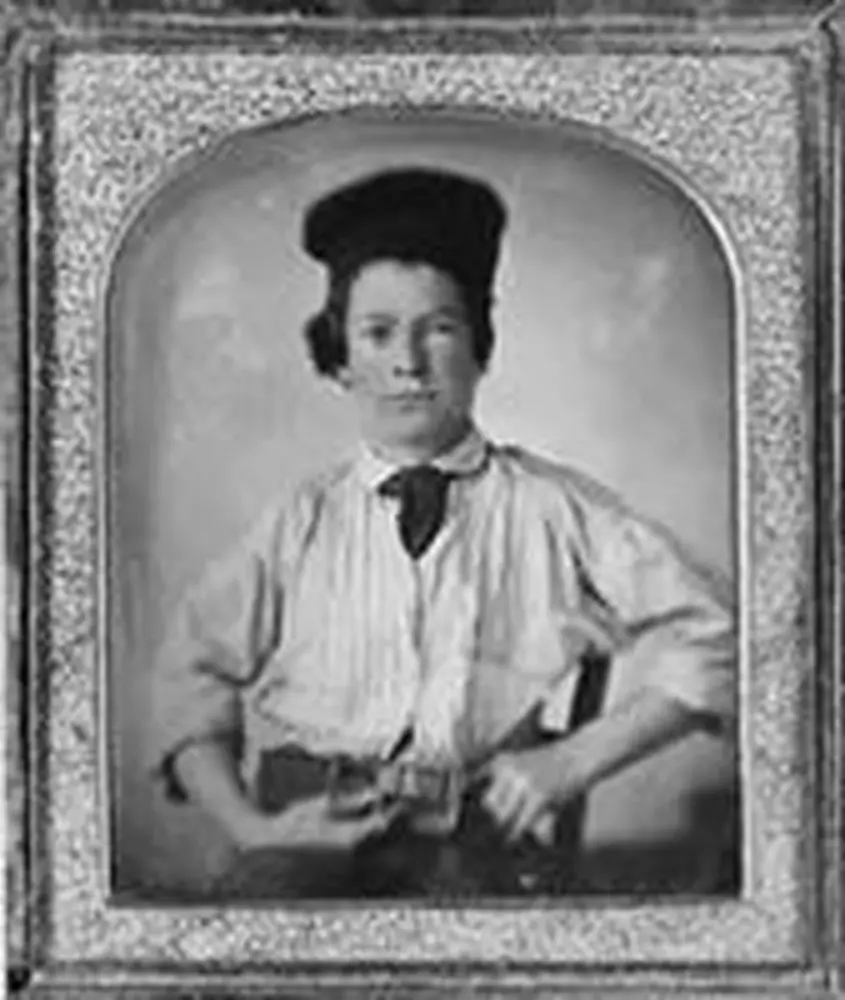
Sam Clemens led a rich and complex life-sometimes as Mark Twain, sometimes not. He usually is remembered as a journalist, stand-up comic, world traveler, philosopher, and literary giant.
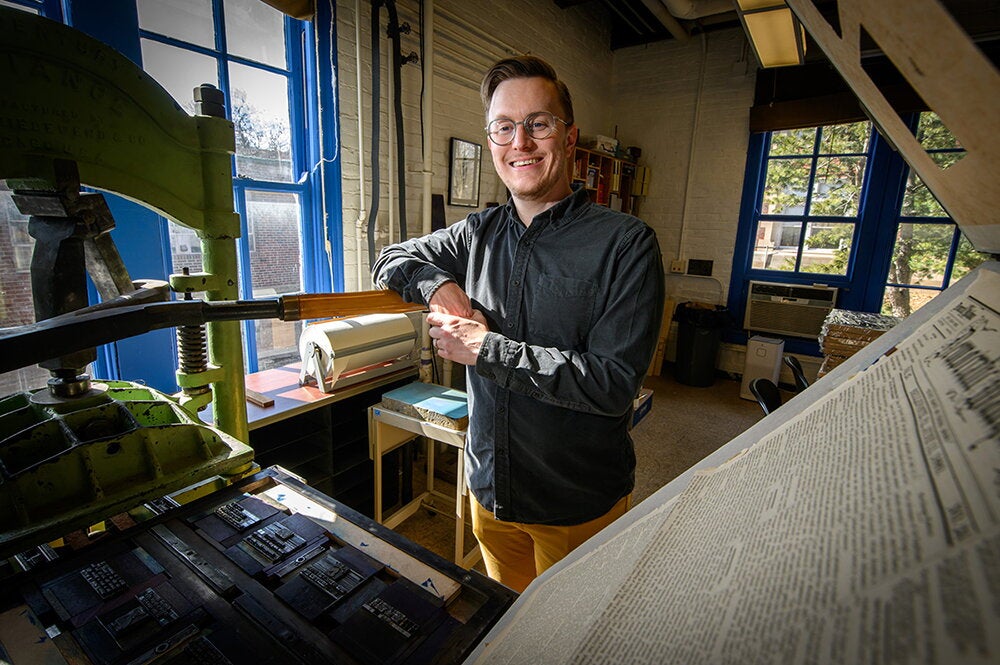
But even a resume like that doesn't tell the whole story or catch the most interesting dimension for our moment in time: Sam Clemens was obsessed with media technology, exhilarated by it, and boggled by it, says English professor Bruce Michelson.
The new information age of the 19th century and its maelstrom of technological changes profoundly affected the publishing industry and this backwoods boy from Missouri, who spent his life bedeviling printers and publishers, investors and readers, as he exploited and subverted these new technologies in the stories he wrote and the books he published with his own company.
As Mark Twain (1835-1910), the hellion from Hannibal became "America's first true media icon, with a dream of power in every phase of the publishing industry," argues Michelson. "He also shaped his artistic aspirations and writing strategies to exploit the new technologies in print."
Mark Twain thought deeply about the cultural and psychological impact of the industrializing media that began to overwhelm the United States as he was growing up," Michelson says. "His writing is energized and informed by his response to a cataclysmic expansion and transformation of publishing, a turmoil of innovation. He wrote about the impact upon culture and public life and upon the nature of the American self."
Michelson rejects the cautionary tales of so many previous biographers-that Twain squandered his genius and sacrificed his writing to the pursuit of power, fortune, and fame.

There is no question, says Michelson, that Twain's publishing business infatuations and disasters pulled him away, for long intervals, from his own writing. But Twain's infatuation with the hardware and possibilities of print media deepened and complicated many important imaginative texts that he did manage to write.
At least five of the 70 "decisive" inventions and patents related to American printing and publishing that came along between 1830 and 1855 attracted and held Clemens' attention. Those inventions were stereotype and electrotype; the rapid development and deployment of powered type-revolving and automated bed-and-platen presses; the mechanized manufacture of low-cost paper; the rapid expansion of railroad and telegraph networks; and technical advances and cost-reductions in printing illustrations.
The massive dissemination of printed images in periodicals and books "transformed Twain's thinking about the books that he intended to write, the subjects he wrote about, his rhetorical style, and the tastes and values of the audience he was writing to," says Michelson.
For example, published in 1869 with 234 illustrations, The Innocents Abroad, a travel book about Europe and the Holy Land, established Twain as a writer of "picture-laden books."
Huckleberry Finn (1885) is a special moment in Twain's career, says Michelson, since the novel explores different technological eras in the history of the book in America: "In several dimensions, this novel is both an artifact of a new information age and a meditation on what it meant to be an author amid the expansion of American publishing."
Clemens also was a genius in the craft of media celebrity. When he invented Twain, he transformed his alter ego into "a brand and a trademark," which he would use to become "the first American master of the international public image."
But despite all the energy and the brilliance, neither the creator nor his avatar was faultless. "Clemens was notoriously jealous of his own intellectual and artistic property and careless about the rights of others. Dedicated at times to his art, he also churned out potboilers and collaborations and spin-offs, authorized package deals, tie-in sales, and mediocre stage productions based on his best-sellers."
Furthermore, says Michelson, "he was a source of misery for nearly every partner and subordinate who worked with him directly. Unpredictable in his moods and his politics, he held fast to his rank as a front-page icon, complete with chemical dependencies, notorious friends, financial disasters, and toward the end a disturbing interest in populating his private house with other people's little girls."
But the 19th-century writer seems to remain relevant today as people struggle to come to terms with emerging technologies.
"We're in a moment," Michelson observes, "when we have to wonder seriously about the continued importance of imaginative literature-of any text that is older than the latest YouTube video."
Yet for precisely that reason, Mark Twain, so fervent and thoughtful about the new media, continues to track well among digitally-driven youth. "You don't have to push him on students," Michelson says. "He is thriving without the life-support of English professors. For a scholar and a teacher, that's a very happy situation."