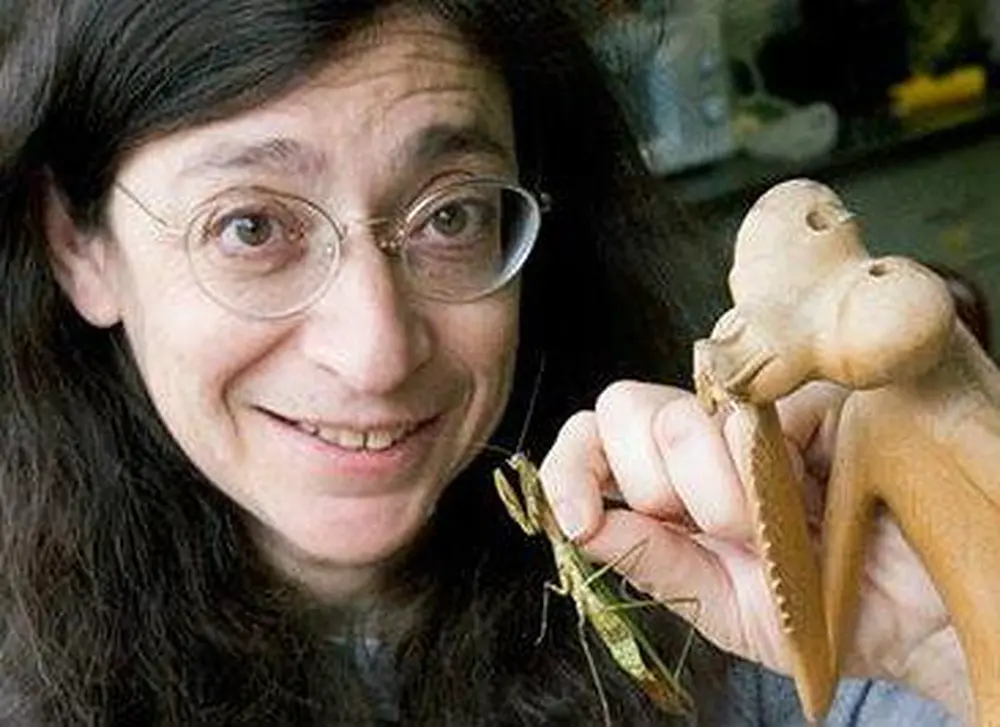
University of Illinois professor of entomology May Berenbaum has been awarded the National Medal of Science, the nation’s highest honor for achievement and leadership in advancing the field of science, according to an announcement from the White House Press Office.
The late mathematician David Blackwell, an alumnus of the College of LAS, also received the prestigious award.
The National Medal of Science was created in 1959 and is awarded annually to individuals who have made outstanding contributions to science and engineering, according to the release.
“Professor Berenbaum’s work has fundamentally changed what we know, how we study and how the public understands the role of insects in nearly every aspect of human life and development,” says Phyllis M. Wise, chancellor of the Urbana campus. “This is transformative scholarship on a global scale and has implications for every person on the planet. This is a well-deserved honor and all of us at Illinois offer Professor Berenbaum our sincerest congratulations.”
Berenbaum, a Swanlund Chair and the head of the department of entomology, has been a U of I faculty member since 1980. Her research, which studies the chemical mechanisms underlying interactions between insects and their host plants, including the detoxification of natural and synthetic chemicals, has produced hundreds of peer-reviewed scientific publications and 35 book chapters.
“Through her inspired work on insects, Professor Berenbaum has had an unparalleled impact on the environmental sciences, with a rare combination of path-breaking scientific discovery and influential public engagement,” says Gene Robinson, director of the Institute for Genomic Biology and Swanlund Chair of Entomology, as well as a long-time colleague of Berenbaum.
A member of the National Academy of Sciences, Berenbaum has chaired two National Research Council committees, the Committee on the Future of Pesticides in U.S. Agriculture and the Committee on the Status of Pollinators in North America.
An academic who is devoted to teaching and fostering scientific literacy through formal and informal education, Berenbaum also has authored numerous magazine articles and six books about insects for the general public.
She also created the Insect Fear Film Festival, now in its 32nd year on campus. The festival engages and entertains hundreds of viewers each year with feature-length films and shorts, commentary on the films, an insect petting zoo, and an insect art contest.
Berenbaum graduated summa cum laude with a bachelor’s degree in biology from Yale University in 1975. She earned a PhD in ecology and evolutionary biology from Cornell University in 1980.
She and her fellow recipients will receive their medals at a White House ceremony later this year.
Late Mathematician Receives National Medal of Science
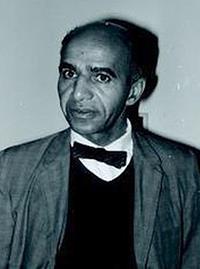
A renowned mathematician and alumnus of the College of LAS has been awarded posthumously the nation’s highest honor in science.
The late David Blackwell, son of an African American rail worker who entered the University of Illinois at age 16, was named a recipient of the National Medal of Science along with U of I professor of entomology May Berenbaum. Blackwell earned a PhD in mathematics at age 22 before going on to become a professor at the University of California at Berkeley.
Blackwell studied under Joseph Doob before entering a workforce where his problem-solving abilities were put to the ultimate test, as most mathematicians had never worked with African Americans. His brilliance was undeniable, however, and by 1954, after working at several historically black universities (including 10 years at Howard University), he earned a position at Berkeley.
He is known for fundamental contributions to many fields in mathematics, including statistics, sequential analysis, and game theory. His 1954 book, Theory of Games and Statistical Decisions, coauthored with M.A. Girshick, is considered a classic. He was also known for being an outstanding teacher, receiving the Berkeley Citation in 1988 for extraordinary contributions to the life of the university.
He would become the first African American tenured at Berkeley, and also the first African American scholar inducted into the National Academy of Sciences (in 1965). He died in 2010, at age 91.
“Basically, I’m not interested in doing research, and I never have been,” Blackwell once said. “I’m interested in understanding, which is quite a different thing. And often to understand something you have to work it out yourself because no one else has done it.”