No, this story is not about interdisciplinary research between psychologists and astronomers. It turns out, however, that imagining life on a distant (albeit fictional) planet helps shed light on our assumptions about fairness in society.
Participants in a study by psychologists at U of I were asked to guess why, on the Planet Teeku, the Blarks were richer than the Orps. The researchers found that a majority of Earthlings focused on the inherent traits of the Blarks and Orps (maybe the Blarks were smarter, or better workers than the Orps) rather than on external factors.
The study, reported in the Journal of Personality and Social Psychology, also revealed that those who attributed the wealth gap to the personal attributes of the Blarks and Orps were more likely to see the disparities on Teeku—and their own society, for that matter—as fair and just. This was true for adults and for children.
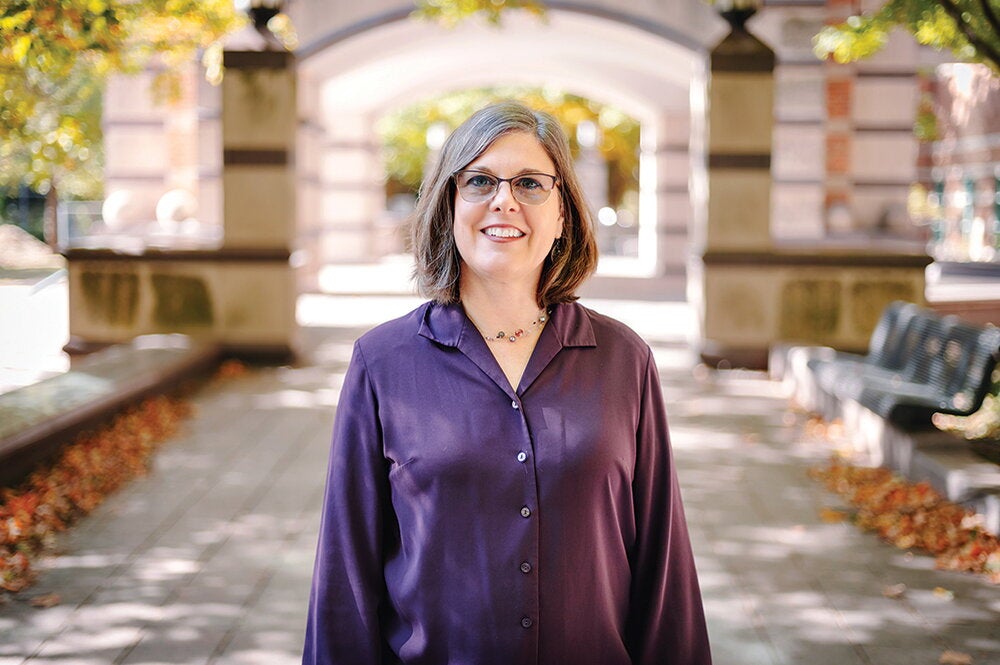
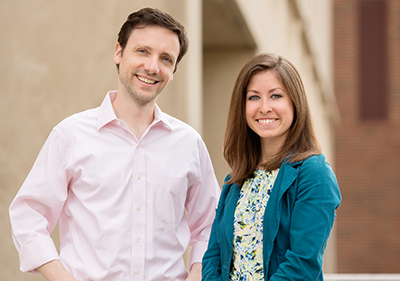
“People of course realize that there are disparities in society, but deep down there is a lot of endorsement of how things are,” says psychology professor Andrei Cimpian, who led the study with graduate student Larissa Hussak. “Even though there is considerable bias in how society is structured, many people seem to think that society is fair. We wanted to know why.”
This finding has been echoed in other studies. A recent study from Yale University reveals that “people vastly overestimate disadvantaged people’s chances of moving up the social ladder,” Hussak says.
“In another study from another team, people severely underestimated the degree of economic inequality present in the U.S., guessing that the top 20 percent had less than 60 percent of the country’s wealth,” she says. “In reality, they control about 84 percent.”
Similarly, she said, people estimated that the poorest 20 percent of Americans possessed roughly five percent of the wealth. The actual proportion, according to the study, is about 0.1 percent, she said.
One hypothesis for why people tend to overlook disparities and defend the status quo is that finding seemingly legitimate reasons for why things are the way they are relieves feelings of uncertainty, anxiety and discontent that arise when one contemplates an unjust system, Cimpian said. The researchers wanted to test whether another human tendency—our penchant for simple explanations—also plays a role in how people react when they are confronted with disparities.
“When you have to make sense of something in the moment, that forces you to rely on things that come to mind easily,” Cimpian said. “And research on memory tells us that what comes to mind easily is facts about a thing itself. We have a memory retrieval bias that favors inherent facts—facts about the people or the things that we’re trying to explain.”
By using a fictional planet, the researchers tried to circumvent some of the emotional baggage that might accompany any description of real-world events—particularly for the adults, the authors said. If there is no emotional need to alleviate one’s anxiety about a particular disparity, one is less likely to try to justify the situation by blaming the Orps or giving the Blarks credit for their status.
When asked for possible reasons for the disparities, the adults and children chose or came up with very similar explanations, Hussak says.
“They overwhelmingly explain the disparities using characteristics or features of the people involved, rather than characteristics or features of the environment,” she says.
Not all adults or children opted for the “quick and easy answers,” Cimpian says. “There were huge individual differences, but the overall tendency was there.”
“Inherent explanations are not necessarily bad or wrong,” Hussak says. “But we think that over-relying on them could lead people to overestimate the extent to which society is fair.”