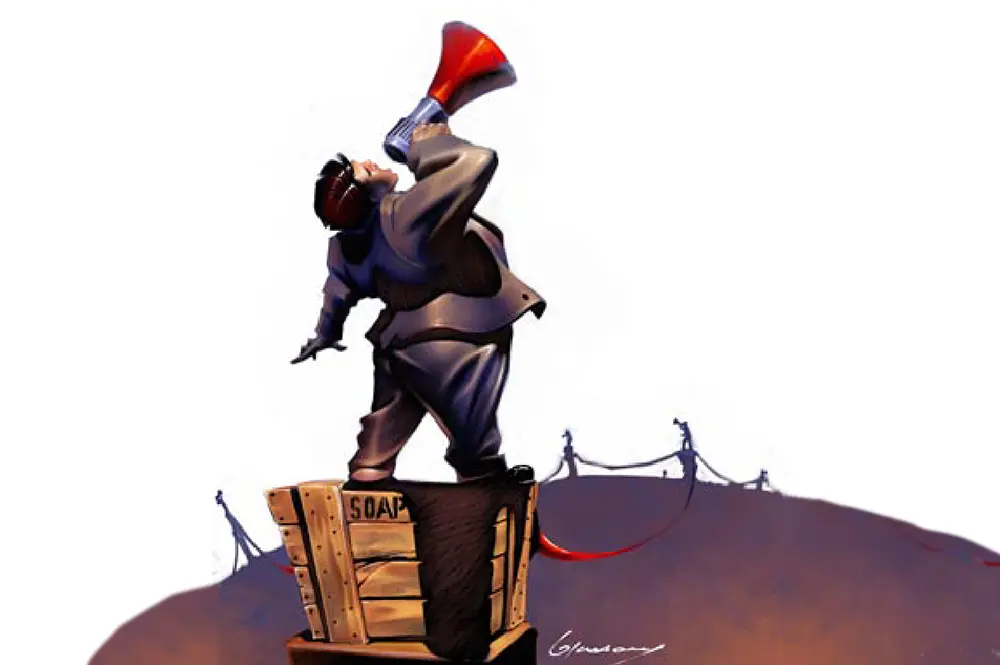
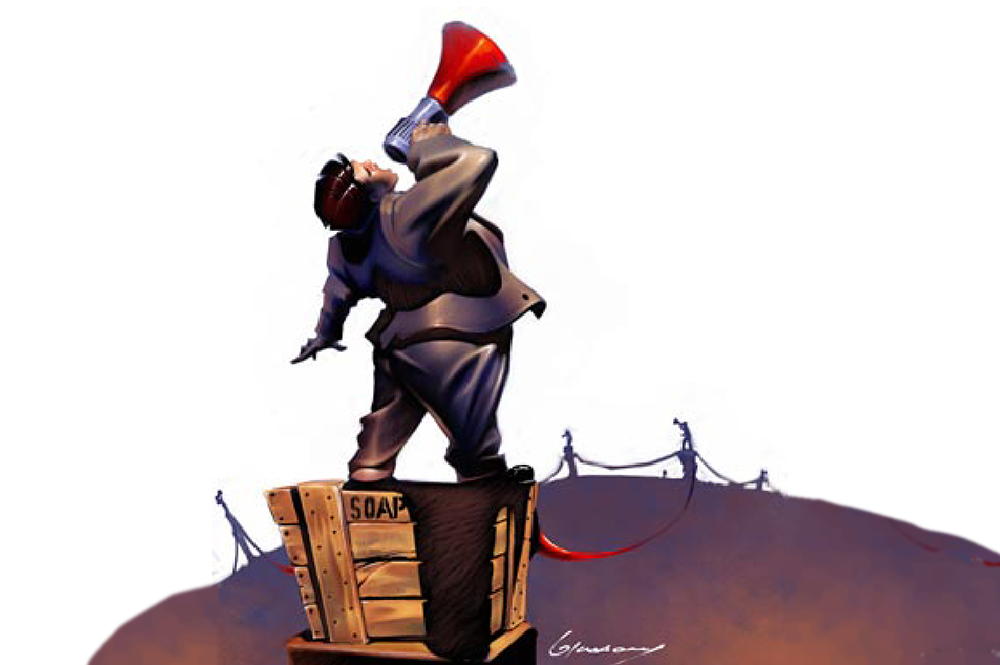
During a recent evening, professors, staff members, and students gathered to take part in a new school tradition: They got up on their soapboxes before a lively crowd and debated on the books that had most changed the world.
A panel of judges then determined the winner from a field of entries ranging from Karl Marx’s “The Communist Manifesto” to Virgil’s “The Aeneid” and the English Football Association’s 1863 “Rules of Association Football.” The victor? None other than Salman Rushdie’s “Satanic Verses.”
The third annual so-called History Soapbox event, organized by the Department of History, featured participants from around campus who debated their own choice for the world’s most influential book before a crowd in the Illini Union.
They gave energetic presentations in whatever format they pleased—using anything from PowerPoint and visual aids to simply force of character and logic—to try convincing the crowd, and most importantly, the judges, that their book was the most world-changing of the presented texts.
The event focused less on academic formality, and more on the classic “Roman Forum” style persuasion methods that encouraged a high-energy atmosphere through the entire room. Marc Hertzman, a history professor and the co-organizer of this event, describes Soapbox as “a raucous event sure to inspire anyone out of the reading doldrums.”
An interactive, sizeable crowd filled the Illini Union’s general lounge, where they cheered, booed, laughed, and enthusiastically supported the speakers that they most agreed with. After the ten speakers had their randomly-ordered six-minute time slots (after which they were strictly and abruptly cut off with an hourglass and a bell), the judges went off to discuss in private to determine their winners.
Texts from dates ranging from some 2,000 years ago to the late 1980s were presented, and the definition of what “changed the world” was open to interpretation. For example, undergraduate student Jackson Turner argued that if not for Karl Marx’s and Friedrich Engels’ “Communist Manifesto,” the world would currently be helplessly in the pit of capitalistic greed with no real level of opposition.
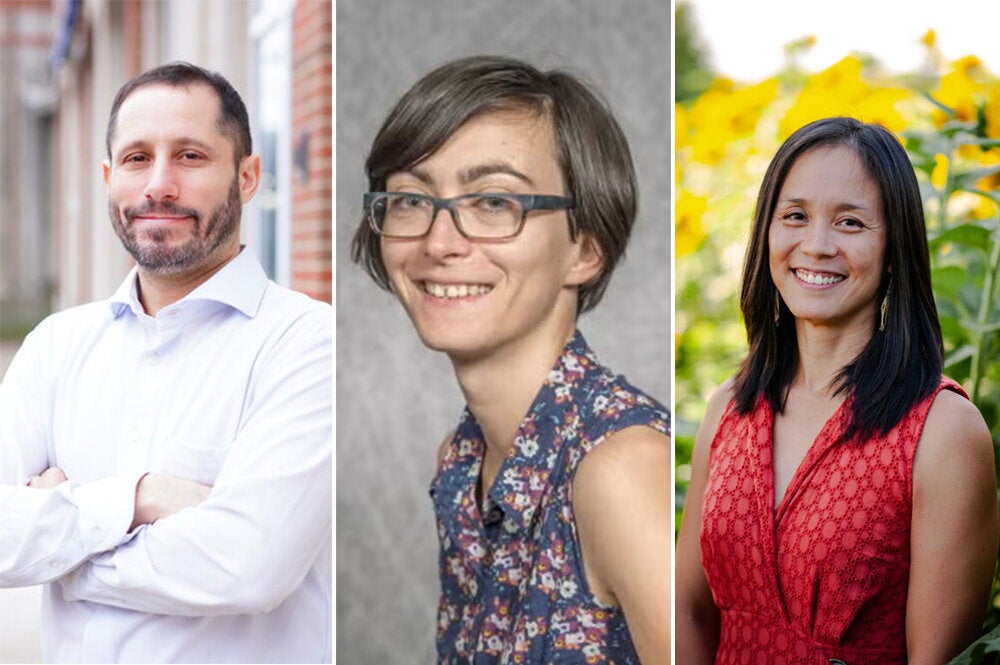
Clare Crowston, professor of history, meanwhile, argued that Ptolemy, in writing “Geography,” the first published theory of a round earth, literally changed people’s views on the physical world itself. Crowston’s argument won her a third place finish.
Graduate student Stefan Djordjevic took second for his argument on the Rules of Association Football, arguing that globally unifying the rules of football has resulted in more global social camaraderie than any other book. History professor Tariq Ali took home first place for his argument for Salman Rushdie’s “Satanic Verses,” saying that the controversial story was responsible for, “creating the Bill Mahers of the world; in creating a kind of liberal Islamophobia that we see today.”
At the end, organizers gauged, by applause, the winner of the People’s Choice Award. The winner was undergrad student Ayesha Patel for her speech on James Baldwin’s “The Fire Next Time,” a book containing two essays about race relations that Patel described as an early philosophy of the Black Lives Matter movement. Other books that were argued for included “1984” by George Orwell, “A Theology of Liberation” by Gustavo Gutierrez, “Maus” by Art Spiegelman, and “The Autobiography of Assata Shakur."