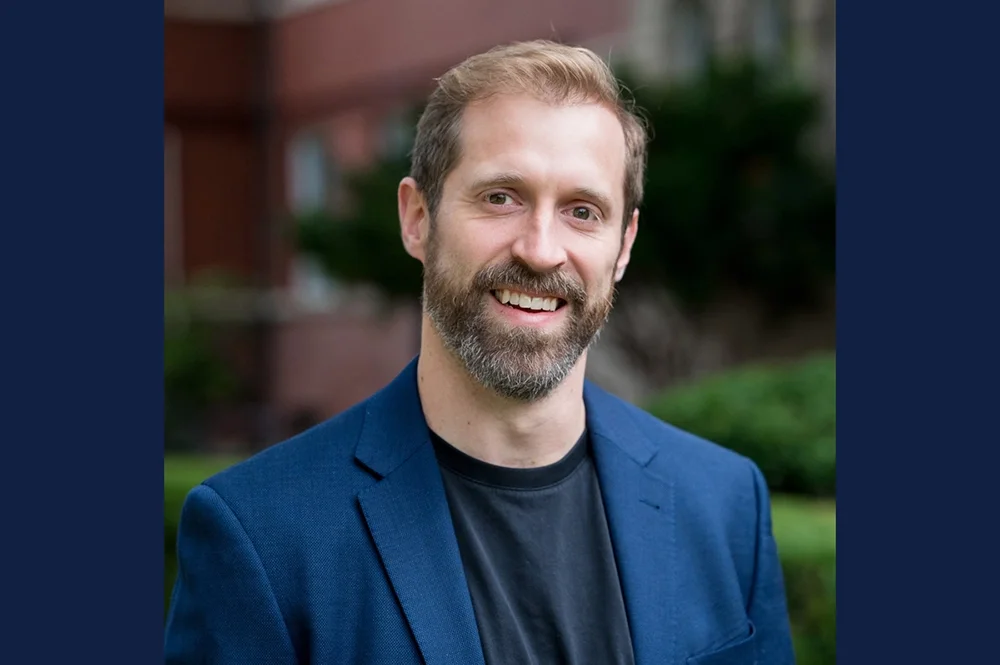
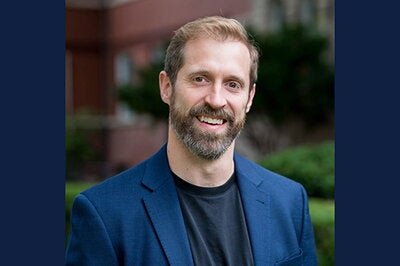
Benjamin Snyder, a professor of chemistry at the University of Illinois Urbana-Champaign, has been named a 2025 Packard Fellow by the David and Lucile Packard Foundation.
The foundation cites Snyder’s work “developing new methods to define and precisely control catalyst structure, and therefore function, at the atomic scale,” in naming him as one of this year’s class of 20 innovative early-career scientists and engineers, who will each receive $875,000 over five years to pursue their research.
Snyder’s research at the U of I lies at the intersection of inorganic materials and physical chemistry. “We study porous materials like zeolites and metal-organic frameworks with fascinating applications ranging from heterogeneous catalysis to adsorptive separations,” he said. “We use advanced physical-inorganic spectroscopy to understand how these materials work and then use tools from materials synthesis to make them work better.”
Snyder earned a PhD from Stanford University in 2018 and then pursued postdoctoral studies at the University of California, Berkeley, as an Arnold O. Beckman Postdoctoral Fellow. In 2023, he joined the faculty at Illinois, where he also is affiliated with the Materials Research Laboratory.
In its announcement, the Packard Foundation stressed the importance of scientific research throughout American history.
“David Packard believed that science was the cornerstone of America’s progress. He invested in science not only because it drives innovation but because it is a public good that strengthens our society and our shared future. Today, that vision matters more than ever,” said Nancy Lindborg, president and CEO of the Packard Foundation. “At a time when we face urgent challenges, the Packard Foundation continues to champion science that is rigorous, evidence based and responsive to communities’ needs. We honor our founder’s legacy by ensuring that science in America remains a beacon: advancing knowledge, informing action and creating a more sustainable world for generations to come.”