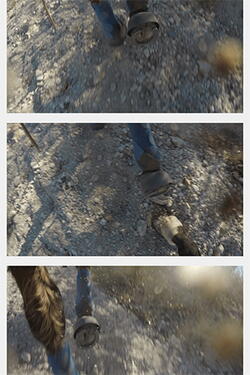
At a calm trot, a horse’s hooves leave divots in the pale, rocky dirt. Under a brilliantly blue Arizona sky, one may wonder where the “tornado” from this artwork's title comes in. Then, the horse picks up speed, kicking up dust and pebbles in a chaotic storm. Some photos are entirely a blur. When the horse gallops through an amber creek, crystalline water droplets resemble a chandelier exploding into a million sparkling pieces. The reflecting sunlight paints streaks across frames.
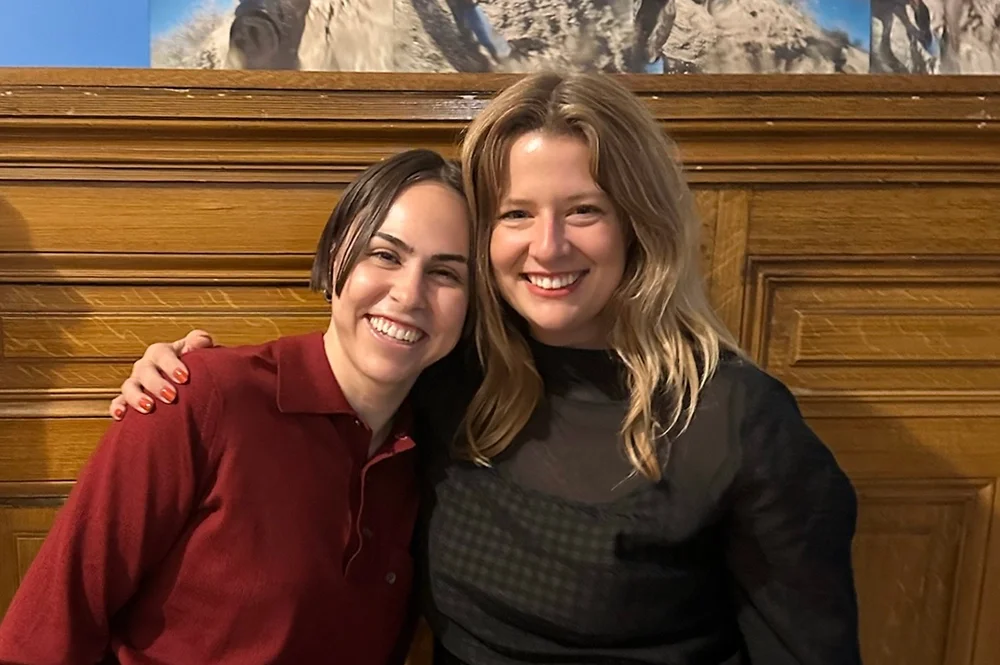
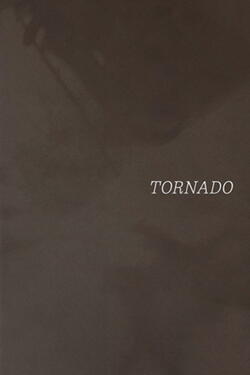
“TORNADO” by U of I alum Jennifer Haare (BA, ‘13, English; BA, ‘13, creative writing) and Jackie Furtado is a chronophotographic artwork following a horse running through the desert. Chronophotography can be described as the bridge between photographs and cinema. It takes a sequence of images and orders them or overlays them, thus giving the feeling of movement in still art.
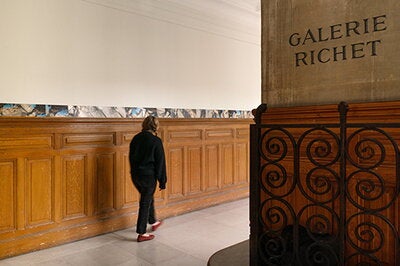
Haare and Furtado made “TORNADO” from over 100 frames of a video taken by a GoPro suspended under a horse. The sequence was released as a photobook, and for several months, a portion of the sequence was displayed in the Paris Cité University Galerie Richet. Haare shared the story behind “TORNADO,” how an artist gets their work to be seen, and how her time at U of I influenced her artistic journey.

Where did the idea for this project come from?
I wanted to do more film work. My best friend and long-time collaborator Jackie Furtado was doing a Master of Fine Arts program in photography at the time, and we wanted to work together in some way. I was like, “Let’s go to Arizona and make a Western.”
We had a friend living in Arizona. She was a farrier, which is a blacksmith who makes horseshoes and takes care of horse hooves. We thought it would be interesting to document her working, so we went to Arizona and made this film called “VALLEY FEVER,” basically following our friend around.
We tied a GoPro loosely around the horse using twine. Tornado was his name. We were just planning to use that footage for some experimental, weird stuff in the middle of the film. When we reviewed it, we were like, this is so cool. It’s such a unique perspective of a horse, which are so often shown with people riding or dominating them. This kind of imagery showed chaos. And then we realized it was kind of like the old Eadweard Muybridge motion studies too.
We exported every single frame — it ended up being like 30,000 images — and just went through, one by one, looking for something. Slowly a narrative and sequence revealed itself.
Once you have your project, how do you get it to be seen?
It’s not a clear path, I guess. Being open and optimistic has played such a significant part in my life and the life of this project — just doing the work, and believing in it, and being able to talk about it when the moment presents itself.
This project is a weird, intuitive one. We made a book for kind of a niche audience. We knew that it would be for people who are willing to take their time on something, they’re into photography or cinema, and they like to be a little in-their-head about things.
I found myself just talking about the project a lot to different people because it made me feel happy and free to work on it. I went to a Luhz book release party in L.A., and we sort of hit it off with the publisher. Later, at the afterparty, I was talking to somebody else about “TORNADO” and I had it up on my phone, going through some of the pictures. Zoe [founder of Luhz Press] crossed the room and was like, “What is that?”
The museum was another chain of events. The press we published through is based in L.A., but the printer is in Belgium. My collaborator and I wanted to go see the book being made, because it’s fun, and you want to make sure they get the colors right.
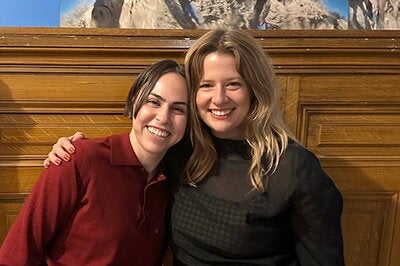
We flew into Paris and then took the train to Belgium. While we were in Paris, we met with a woman who had previously worked with Luhz Press at Paris Photo, which is the largest photo fair in the world. We met her for lunch. It just so happened that our project paired very well with another show that was happening in the fall for the Photo Saint Germain festival. We delayed our train, visited the Galerie Richet, and put the proposal for the show together while the book was being printed.
It sounds like networking played a role in getting the work out there. How would you recommend someone entering the field or moving to a new area get started?
A lot of my networking started at U of I — the Urbana scene. Going to house parties and talking about art.
Networking isn’t just like “cold-calling and asking to get coffee” or whatever. What’s worked for me is just going to things that you’re interested in, being excited about it, and talking to people about that. I think people can tell when you’re actually excited about something, and the conversation kind of just flows from there. Then there’s being strategic and knowing who can be really helpful, who can give good feedback when you need it.
Maybe when I was younger, I was kind of cynical about the term “networking event.” I was like, oh, that’s for business people. But your friends have the power to change your life and help you and support you. I tried to keep up with people I met throughout the years. Following up when you meet people who are interesting, following up with people who played a big role in your life, like professors or friends — over time, I think that goes a really long way, just maintaining that connection.
How do you keep pushing despite fear of failure?
I was lucky to have a strong collaborator. It’s important to learn to work together with somebody, and that person keeps you going and shows you possibilities. We had to believe in this.
It might be worth noting that much of my creative anxiety can be financial. I've been working since I was 14, and “making art” can still feel like such a decadence to reckon with, but the whole process has basically immeasurable value and it is good practice to shush the capitalist in our mind.
Is there any advice you’d give to an aspiring artist?
I used to get so in my head, saying, “I can’t do that. That’s for other people to do.”
You don’t have to be in film school to make a film. Spend your time on whatever you want. You should make as much as you possibly can while you have the energy, and you can always make it better later.
If you’re a person who needs to overthink, I’d focus on redirecting that energy away from your own stuff. Instead, just read or watch as much as possible. Then, practice talking about art with other people. Develop your own taste and instinct. Knowing how to talk about your work is pretty critical to getting support. I don't think there's a “right” way to do it, but “your way” should be distinct, especially in this AI cultural homogeneity era.
Do you have any special memories from your time on campus?
One of my favorite things to do when I would get stuck in my anxiety brain is riding my bike to the south farms. I would just go and look at the cows or the arboretum or the cornfields. It was cool to go from the buzzy college environment to the blowing cornfields. I’m trying to convince people that the prairie is an ocean. There’s a lot of life happening in there.
Haare and Furtado published “TORNADO” through Lulz Press, an independent art book publisher in Los Angeles. The book is available on the Lulz Press website.