I asked Helaine Silverman, professor emerita in anthropology, if she remembered her first time crossing the Mississippi River. She said, “I remember exactly.”
August of 1982. “We got to St. Louis and we started driving across the bridge over the Mississippi,” she recounted. “I just kept saying, I can’t believe it. This is the Mississippi River. This is the river that made America. … It’s mythic in the American imagination. It’s history. It’s technology.”
Silverman said it was an emotional experience for her because she knew the historical significance. She was familiar with the mythos that gave the water such a sense of wonder.
“What I was unprepared for was the flatness, the vastness, and the emptiness of the prairie once we crossed the river,” she said.
Having grown up in New York City, lived in Lima, Peru, and gone to school in Austin, she called herself “an urban creature.” She wasn’t used to endless fields dotted with the occasional farmhouse.
The prairie is indeed flat and vast, but Silverman said she would not use the word “empty” anymore. Through her work with the Mythic Mississippi Project, she has become quite familiar with Illinois small towns.
The MMP is a public outreach and engagement project supported by a University of Illinois System grant called the Presidential Initiative to Celebrate the Impact of the Arts and the Humanities. Since its launch in 2019, the MMP has funded numerous cultural heritage initiatives downstate.
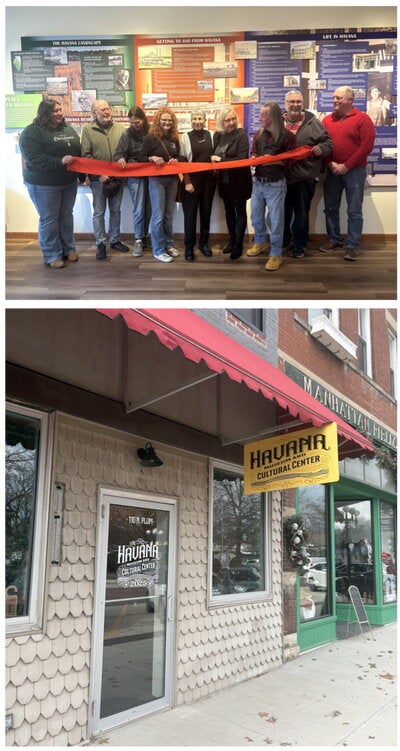
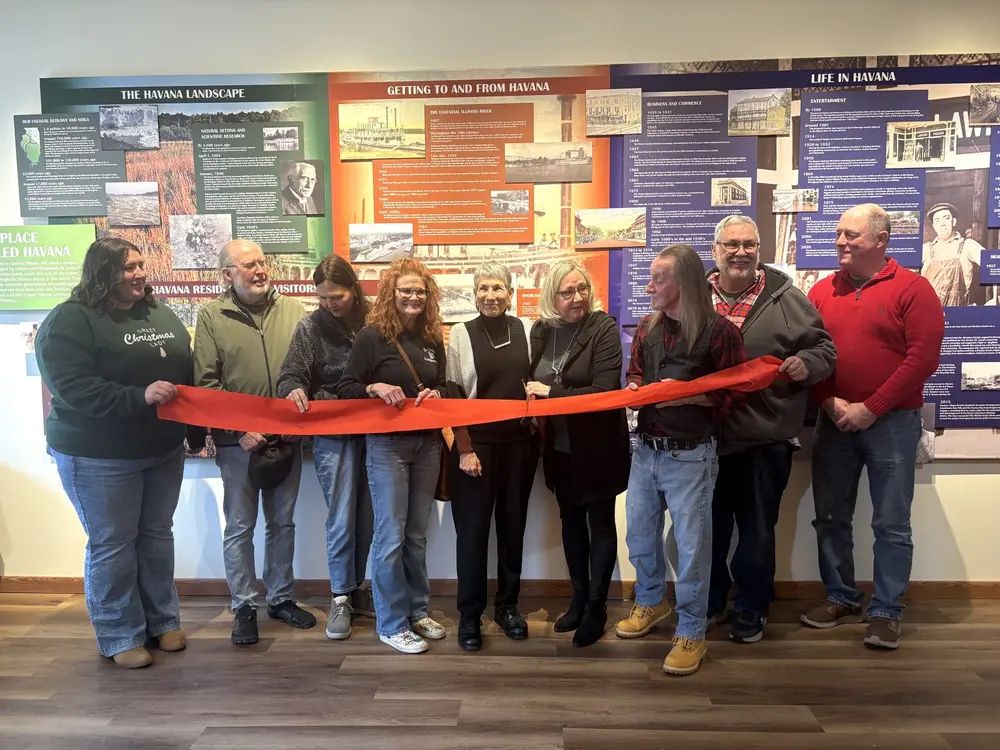
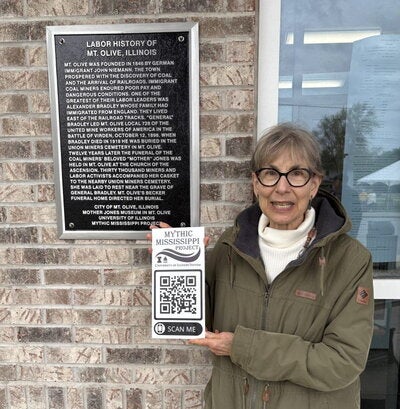
The MMP encourages Illinois communities, particularly smaller ones, to tap into their cultural heritage for development. They supported the creation of the Havana Museum and Cultural Center, which opened last December. They helped towns put up historical markers, like the one put in front of Montgomery County Courthouse last August. Silverman said these efforts can promote tourism.
As someone from a relatively small Illinois town, the prospect made me raise an eyebrow. My friends back home would joke that the closest thing to a tourist attraction we had was a Walmart.
I had actually spent the past summer writing articles about my hometown’s history, in celebration of our bicentennial. I was genuinely fascinated by those stories, mainly because it gave context to the places I passed by every day.
Our soccer fields were once a world-famous pony farm, and Abraham Lincoln spoke outside the candy shop on the square. To someone outside of my hometown, these are fun facts, but they wouldn’t warrant a drive through hours of cornfields for a visit. How do you get someone interested in the local history of a town that isn’t theirs?
The MMP’s solution: give it a theme.
“If we could find themes that link towns — whether it’s abolition and slavery, whether it’s industry, whether it’s the colonial French or the Germans — there’d be a reason to visit,” Silverman said.
These connections make the towns significant to state or even national history. From there, the objective is to motivate tourists in Springfield to visit these themed routes as a continuation of their educational adventure.
Illinois and coal
One of those themes is Illinois’ coal towns. Silverman developed an interest in industrial heritage through the strategic partnership between the University of Illinois and the University of Birmingham.
After returning from a trip to Durham, England, to study their history of mining, a neighbor saw Silverman unloading her suitcases. She asked where Silverman had been, which led to this exchange:
Silverman said, “I was in Durham with the coal miners.” She went on about her studies related to coal in that region.
“You know you could do that here,” the neighbor said.
“Here, where?” Silverman asked.
“Illinois is one of the greatest coal states of the country,” the neighbor informed her.
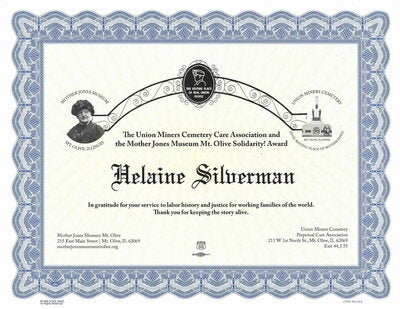
This was news to Silverman. “I had no idea Illinois had coal,” she told me. “Our heroic coal miners are responsible for our eight-hour work day — for so much of the labor rights that we take for granted, and that obviously we’re still fighting for. You can really relate to these incredible industrial strikes.”
Silverman now calls Illinois coal history her “abiding passion.”
“Once you start speaking about the history of the labor movement, and the struggles of coal miners, and the achievements of the eight hour work day, all of a sudden you’ve got a group of towns that were dramatically participating in history,” she said.
The MMP made a trail of towns linked through coal history, which they named “The Coal Triangle.” A special town to Silverman is Gillespie, Ill.
“Gillespie is remarkable because they were one of the Illinois epicenters of coal mining,” Silverman said. “The last mine closed in 2007. Before we entered the scene, they’d already formed a civic association called Grow Gillespie.”
The community had ideas for how to play into their local history to create tourism, but they needed resources to get some real momentum. That’s where the MMP could help.
“[Silverman] gave our whole town a shot of adrenaline,” said curator Dave Tucker of the Illinois Coal Museum in Gillespie.
The project’s impact on the locals was noticeable.
“We’ve installed about two dozen historical signs that are on building facades, and this can be a walking tour,” Silverman said. “The coffee shop has expanded its hours. A local man is opening up an ice cream shop. A local lady said, ‘I have a lovely house; I’m going to have a B&B.’
“It’s the living fulfillment of how we think the Mythic Mississippi Project should work. We can help communities to see that which was forgotten or that which they didn’t think was so significant.”
In February of this year, the town even named Silverman a Gillespie hero for leaving “a much valued mark upon our community.”
The MMP created banners and posters to display in the coal museum. They helped digitize local newspapers from a significant era in American mining history. Silverman also recorded a lecture on labor history to be played in the museum as part of an educational program Tucker organized for high school teachers.
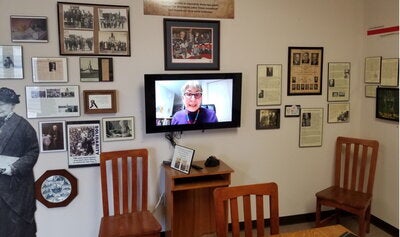
Tucker said local history was being worked into their town’s high school curriculum, which made me think back to my high school. I lived in the same town for all of my school years, yet I cannot recall a single social studies class where local history was discussed.
I realize now that my hometown had been “placeless” to me. That was a term Silverman used to describe how the U of I felt to her before she learned Illinois history. “It was a vacant landscape,” she said. “Now, I feel so grounded. As I drive by towns, they’re meaningful to me.”
One of the interviews I did in my hometown bicentennial reporting was with a high school student who had designed commemorative coins. He told me how he had researched the stories of various historical figures and sites in our town for the designs, and it had become a bit of a rabbit hole for him. I felt the same way with my research.
As it turns out, there are young people who are eager to learn about their hometown history.
“Yesterday, a young man walked into the coal museum and asked if he could volunteer for high school credit, and I almost fell out of my chair,” Silverman said. “It’s exactly what we want.”
U of I around the state
In my research last summer, I found a digital copy of a history book written about my hometown in the U of I library’s digital archives. I remember smiling at that, because it made me feel like my school cared about my town’s niche history. It was deemed important enough to be scanned and archived.
The U of I System grant’s support for the MMP is another example of the university recognizing the importance of state history, even in smaller communities.
“Now there are all these plaques that say University of Illinois, Mythic Mississippi Project,” Silverman said. “It’s the best advertisement for the U of I. We are just scattered all across certain towns.”
The grant’s description explains how projects like the MMP “enrich our lives and are essential to education.”
“It would be really great if the U of I had field trips for students and took them around the state,” Silverman said. “One’s life is so much more enriched if you know local history.”
Adrien Reetz is a rising senior journalism major and news writing intern for the College of LAS. He grew up in Washington, Ill.