Advancing our community

Body

LAS influence

The College of Liberal Arts & Sciences at the University of Illinois Urbana-Champaign is filled with accomplished, thoughtful, and dedicated faculty, staff, students, and alumni whose work influences many advancements throughout our community. LAS strives to address the world’s fundamental problems and grand challenges through indispensable research, innovative courses, and an ingrained focus on diversity.

Read on to learn how the College of LAS is advancing our community in Urbana-Champaign and beyond. 

Book looks at treasure trove of scientific data from 19th-century HMS Challenger voyage

Image
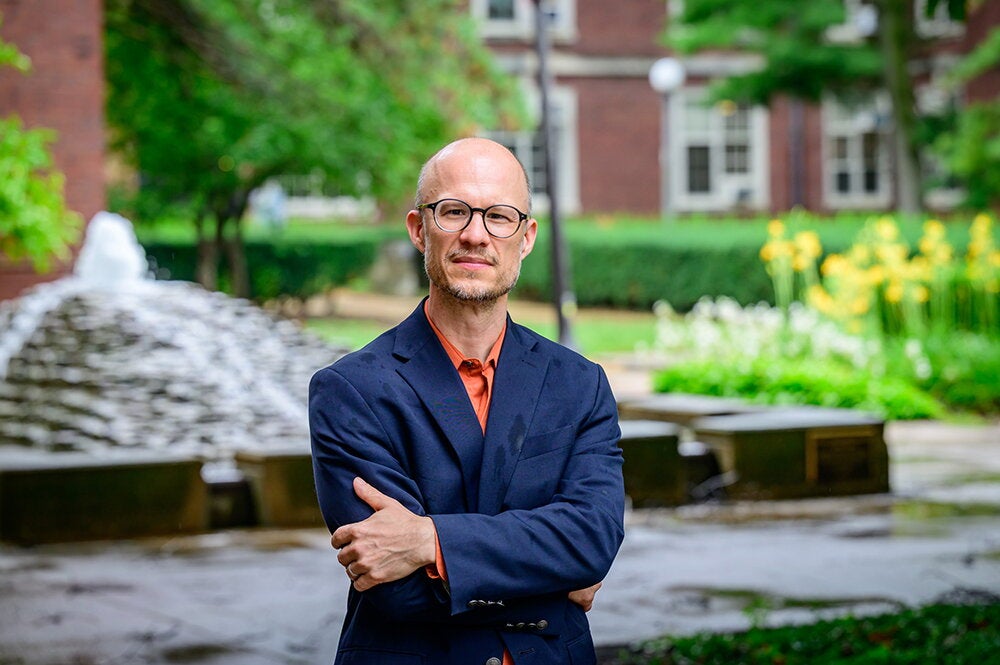
English professor Gillen D’Arcy Wood.

Professor discusses "unimagined" findings from one of the first research missions

Illinois News Bureau's Jodi Heckel interviews Illinois English professor, Gillen D'Arcy Wood, on his book: “The Wake of HMS Challenger: How a Legendary Victorian Voyage Tells the Story of Our Oceans’ Decline.” Wood is a historian of 19th-century environmental history and science and the director of the environmental writing program at the Institute for Sustainability, Energy and Environment.

The voyage of the HMS Challenger in the 1870s was a sprawling 3½-year expedition to explore the world’s oceans. The scientists aboard the vessel collected 100,000 specimens of sea creatures, discovered 5,000 new species, mapped the ocean floors and took hundreds of measurements of sea temperature and chemistry that formed the basis of the discipline of oceanography. The data collected by the Challenger provide a snapshot of the preindustrial oceans and a way of measuring how much they’ve changed.

“The plants and animals they found and the amazing undersea geography that was completely unimagined before has been so important to 20th century science,” Wood said. “What attracted me to this was its singularity. It’s the first research mission of its kind and one of the great discovery expeditions.”

Continue

Wood previously created a comprehensive online database of the scientific information collected by the Challenger as part of his Oceans 1876 digital project. His book on the Challenger expedition is the second part of the project. In the book, Wood focused on sea creatures, with each of the chapters featuring an animal, plant or phenomenon. He chose creatures that were charismatic; that were the subjects of enough scientific research that he could tell the story of their history, biology and behavior; and that were threatened or endangered.

“I also was looking at the Challenger and its legacy as a unique snapshot of oceans 150 years ago,” Wood said.

The expedition’s scientists took temperature readings at the surface and at various depths at 500 different locations where they stopped to take samples. They also measured ocean chemistry and acidity and produced the world’s first salinity map of the ocean.

Read more

940 Feet series

Join LAS professors and students for a stroll on the Quad, and learn more about the influential people advancing our community.
Illinois communication professor Emily Van Duyn

Differing ideologies led to strained romantic bonds

A new study by communication professor Emily Van Duyn said that online misinformation/disinformation, conspiracy theory groups, and their former partners’ rabbit-holing behaviors caused insurmountable rifts in their relationships.

Illinois sociology professor Rueben A. Buford May

Differing ideologies led to strained romantic bonds

Some nightclubs in Chicago use tactics such as charging Black men inflated prices for drinks or turning them away at the door and not permitting them inside, a team led by sociology professor Reuben A. Buford May found in a recent study.

Illinois plant biology researchers

Researchers gain new insight into underground root nodules

Illinois plant biology researchers identified clusters of genes in soil bacteria that enhance plant growth.

Body

Faculty research

 The College of LAS has more than 600 faculty experts working on the world’s fundamental problems and grand challenges. Learn about their work.
Block Reference
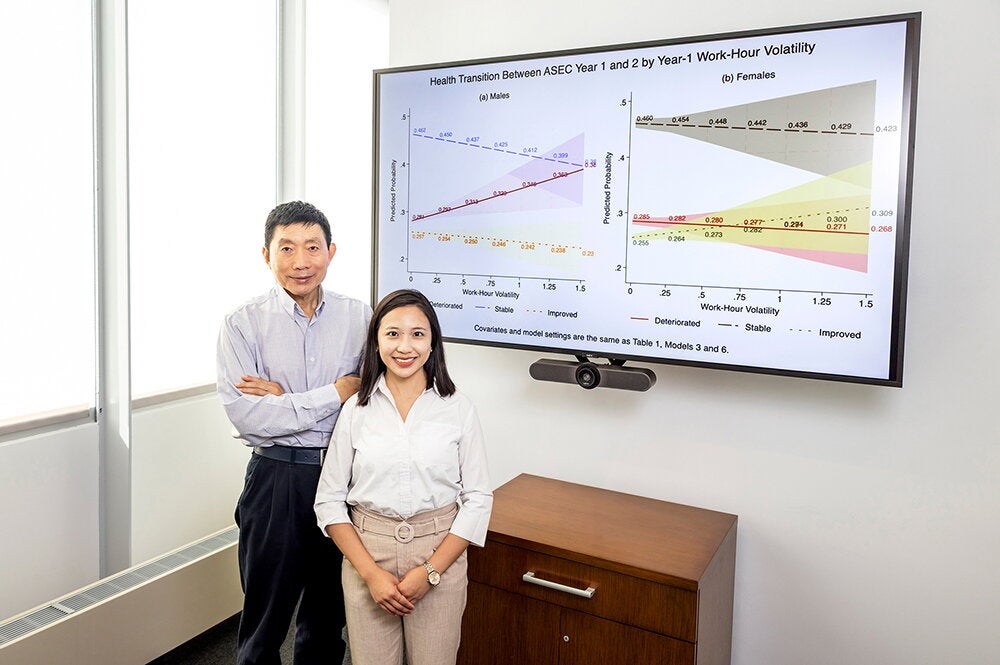
Read article: Digital divides harmed the nonprofit sector during the COVID-19 pandemic
Digital divides harmed the nonprofit sector during the COVID-19 pandemic
 Many humanitarian organizations in the U.S. experienced multiple digital divides that disrupted routine operations and compromised their services to vulnerable refugee populations during the COVID-19 pandemic. These challenges not only elevated refugees’ health risks, they also jeopardized...
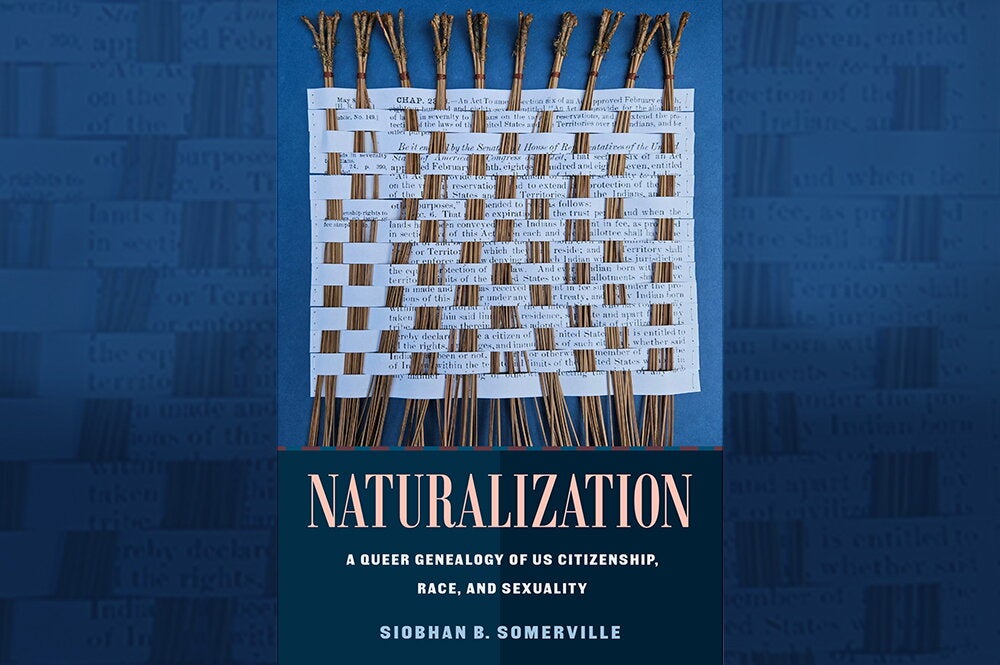
Read article: Historic Native American robes — the subject of an Illinois-led project — to be displayed at Versailles exhibition
Historic Native American robes — the subject of an Illinois-led project — to be displayed at Versailles exhibition
 Stunning robes created more than 300 years ago by Inohka, or “Illinois people” — Native American tribes whose homelands include Illinois — will be on public display at a special exhibition at the Palace of Versailles in France that opens this month. The exhibition will include one of the most...
Read article: Six LAS scientists rank among the world’s most influential
Six LAS scientists rank among the world’s most influential
Six scientists in the College of LAS have been named to the 2025 Clarivate Analytics Highly Cited Researchers list. The list recognizes researchers and social scientists who have demonstrated exceptional influence, as reflected through their publication of multiple papers frequently cited by their...
Read article: Tracing the origins of terrorism
Tracing the origins of terrorism
 When did acts of political violence become classified as terrorism? Who is considered a terrorist? And how do we understand terrorism in the United States? These are the questions that philosophy and ...
Read article: New AI tool helps match enzymes to substrates
New AI tool helps match enzymes to substrates
 A new artificial intelligence-powered tool can help researchers determine how well an enzyme fits with a desired target, helping them find the best enzyme and substrate combination for applications from catalysis to medicine to manufacturing.Led by Huimin Zhao, a professor of...
Read article: How do bacteria become resistant to antibiotics?
How do bacteria become resistant to antibiotics?
 A new report from the Centers for Disease Control and Prevention on the deadly drug-resistant bacteria NDM-CRE found a 70% rise in infections in the U.S. between 2019 and 2023. Also known as “nightmare bacteria,” NDM-CRE has few effective treatment options and high mortality rates. Brenda...