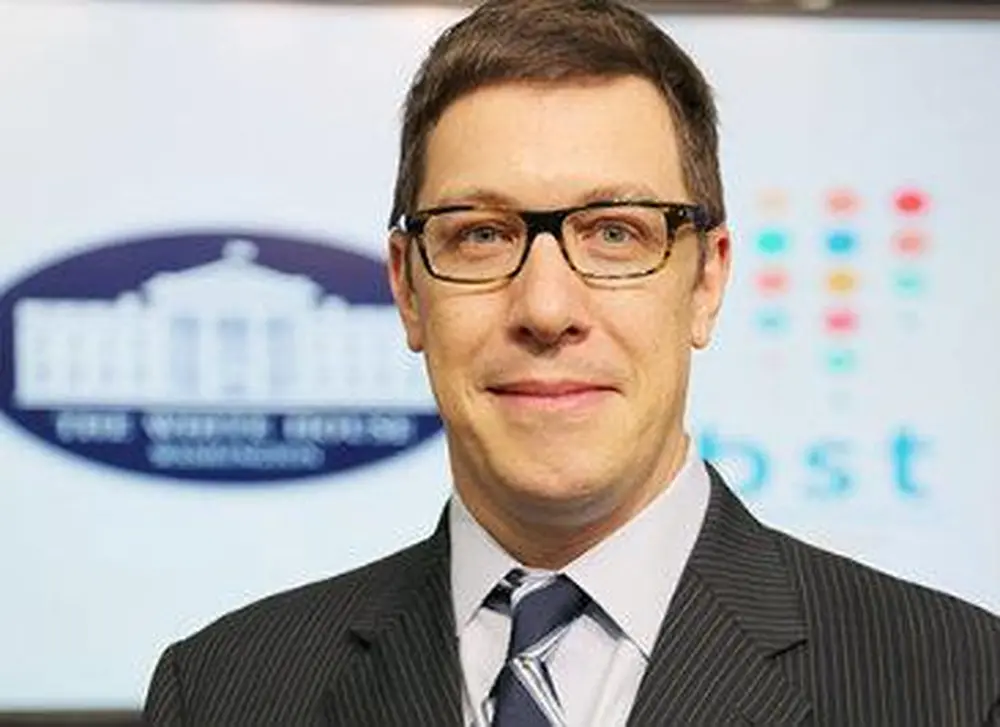
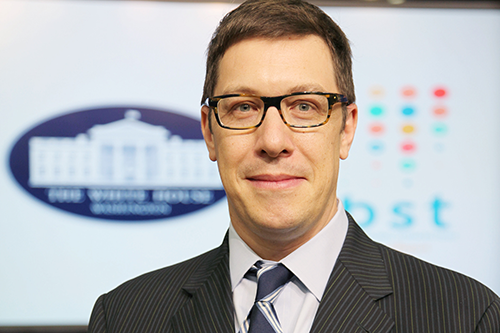
A University of Illinois political science professor has been appointed to a White House team that’s applying insights from social and behavioral science to improve access to federal programs.
Jake Bowers began his stint with President Obama’s year-old Social and Behavioral Sciences Team (SBST) last month and will continue with it through next summer. Bowers said it’s a perfect opportunity to apply his expertise in political methodology and applied statistics to real-world problems.
“It turned out they had a use for somebody like me who could help them deal with tricky research design and data analysis issues, but at the same time, I could get involved in public policy-type work,” Bowers said.
Much of the SBST’s work is focused on making programs easier to access and more user-friendly. It might involve finding ways to streamline access, improving how information is presented, or changing the way program options are presented and structured.
According to a recent report, projects from the team’s first year resulted in more service members saving for retirement, more students going to college and more farmers obtaining credit, among other outcomes.
Bowers found out about the SBST through a group email list after his wife and colleague, Cara Wong, learned that she had received an appointment as a Russell Sage Foundation Visiting Scholar and would be spending the academic year in New York City.
He and Wong and their children are living in New York while he periodically commutes to Washington, D.C., for meetings.
Part of what attracted Bowers to the SBST was the independent way in which team members are allowed to work. “The members of the SBST are entrepreneurs, basically. We try to find out what federal agencies need, and then we try to help them,” he said.
When in Washington, Bowers works out of the General Services Administration building about two blocks from the White House. His team is based in the GSA’s Office of Evaluation Sciences, though it reports to the White House Office of Science and Technology Policy.
Bowers is one of only three academics on this year’s team, though all of the members have strong backgrounds in fields such as psychology, economics, public policy, international development and political science.
He hopes the SBST will be an opportunity to continue work in domestic policy, as well as to be more directly involved in leading studies—in addition to being the methodologist advising about analysis and design.
“The SBST allows me to combine science and public service and my general nerdiness,“ Bowers said. “I’m sort of thrilled.”