An LAS professor has recently been awarded a position in a prestigious international academic society, and she’s considering how to expand the group’s membership as she prepares for leadership.
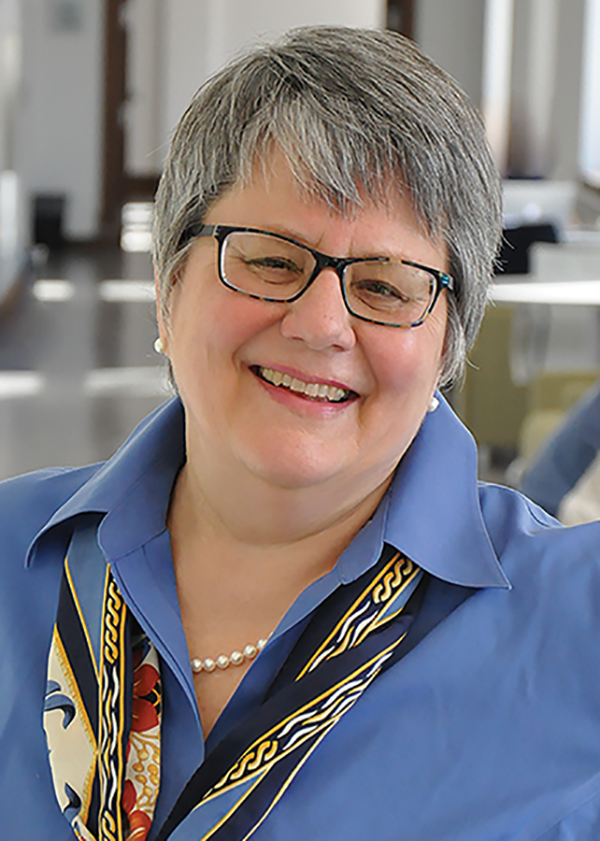
Germanic languages and literatures professor Mara Wade has been appointed as vice president of The Renaissance Society of America, the largest international learned society of its type in the world. She has been given this position for a full six-year cycle, which will involve two years as the vice president, two years as president, and two years in the past-president position.
Founded in 1954, RSA has grown to include over 5,000 members around the world, and is devoted to the interdisciplinary and comparative study of the 400-year era spanning from 1300 to 1700. RSA’s members are often found at universities and other institutions of higher education as faculty, graduate students and postgraduate students, as well as at museums, libraries, and cultural institutions. RSA also has members who pursue their own independent studies.
RSA’s journal, Renaissance Quarterly, published by the University of Chicago Press, publishes new research and about 500 book reviews per year.
Wade said that this position is a humbling appointment for her, especially considering that she is the first professor of German to serve as president. She said that she would very much like to tap into the perspectives of Renaissance scholars all over the world.
“Only very rarely has someone from a state university and not from the East coast been recognized in this fashion,” Wade said. “The invitation to serve was quite unexpected. I’ve been bringing more of my Scandinavian network in, I would like to bring in my Middle Eastern, South American, Mexican, and Asian network. It would be very, very good to welcome these new perspectives on something we’ve been studying for a long time; I’m sure it can only enrich us.”
Wade said that she wants to expand the pool of scholars in RSA.
“I would like to see more scholars from outside of Europe and North America become active,” Wade said. “While we have members from all over the globe, we can increase representation from other parts of the world which will make us a more robust institution.”
Wade is also currently advocating for a larger focus on digital research and would like to see it more closely integrated with traditional modes of scholarship. She is also seeking to increase the RSA’s means of sponsoring and encouraging research through their endowment so as to, “ensure that Renaissance studies, especially in fields like German, continue to be taught at leading universities, like the University of Illinois. Increasing fellowships at all levels, publication support, outreach, and public humanities will all increase the profile of Renaissance studies, within and beyond the academy.”